Inspiration for a series of drawings began in China

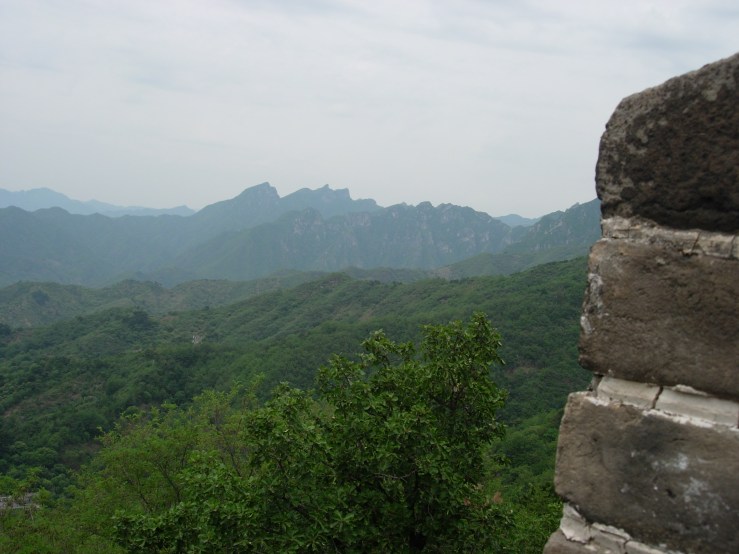
In my first blog I explained that the name ArtTuzi for this site originated from my year in China. While there I was inspired to create…. At first living in China brought a new experience, sight, smell or sound daily. There were moments when it felt as though I had tumbled into a wonderland of the unfamiliar. The jagged mountain peaks outside of my window were sharp and dramatic like the teeth of a dragon. These mountains can be seen in many traditional Chinese landscape paintings like the handscroll from the Northern Song dynasty at this link to the collection of the Metropolitan Museum of Art http://www.metmuseum.org/toah/works-of-art/1973.120.1 and in this photo I took while standing on the Great Wall of China.jagged mountaintopsA kind of sensory explosion from new experiences triggered what became a series of drawings. It started at school one day while I was prepping for class and setting out watercolors and brushes for my students. Thinking about the spontaneity that my young students would have with this media, I got some scraps of paper and just started playing with juicy washes of bright colors and puddles of water, letting the colors flow where they wanted. At the end of the school day while cleaning up I looked at those scraps of paper with their spontaneous amorphic shapes and using a fine point marker, I began to trace around some of the shapes, adjusting pressure and line speed to create imagery. Already in love with mark making, drawing lines without a specific objective felt liberating. Looking at the drawings I sometimes saw the zoomorphic imagery of imaginary creatures, and sometime fantastic landscapes like a Hieronymus Bosch painting. See that painting at the following link to the Prado museum in Spain: https://www.museodelprado.es/en/the-collection/art-work/the-garden-of-earthly-delights-triptych/02388242-6d6a-4e9e-a992-e1311eab3609
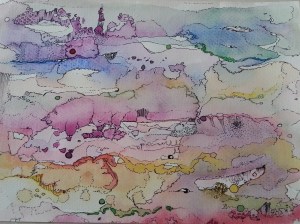
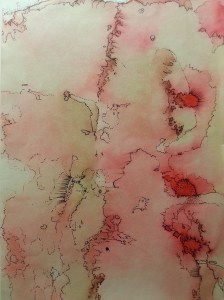
drawing fuzhou cropthree red spots


China was inspiring my creativity and my imagination providing a renewed perspective. I began working on a small scale because it was easier to carry small pieces of paper around with me to draw wherever I went. The park and my favorite Starbucks were two places to sit and watch the world go by while I drew lines over the color with a fine black marker.8 pieces drawing ed
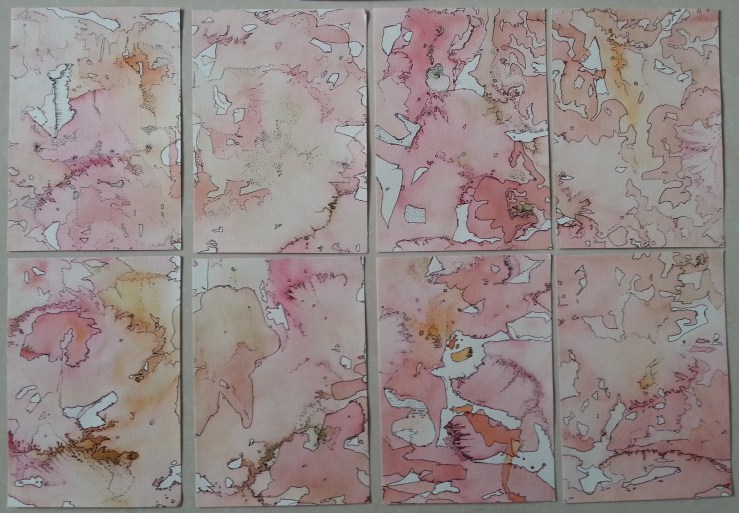
I begin by applying a ground of paint, allowing the media to do what it wants accepting the random wanderings of pigment mixed with water and yet at times guiding it as well when adding more pigment or leading the direction of a puddle of color. Sometimes wetting the paper, sometimes spraying with water, experimentation and spontaneity is key. The field of colors relies to a large extent on chance and play, a relaxing of rules. I call these works drawings because the mark making is my focus even though at times it may seem that the lines take a secondary role to the ground of color. The drawings can be regarded as control over a field of entropy or lack of pattern.

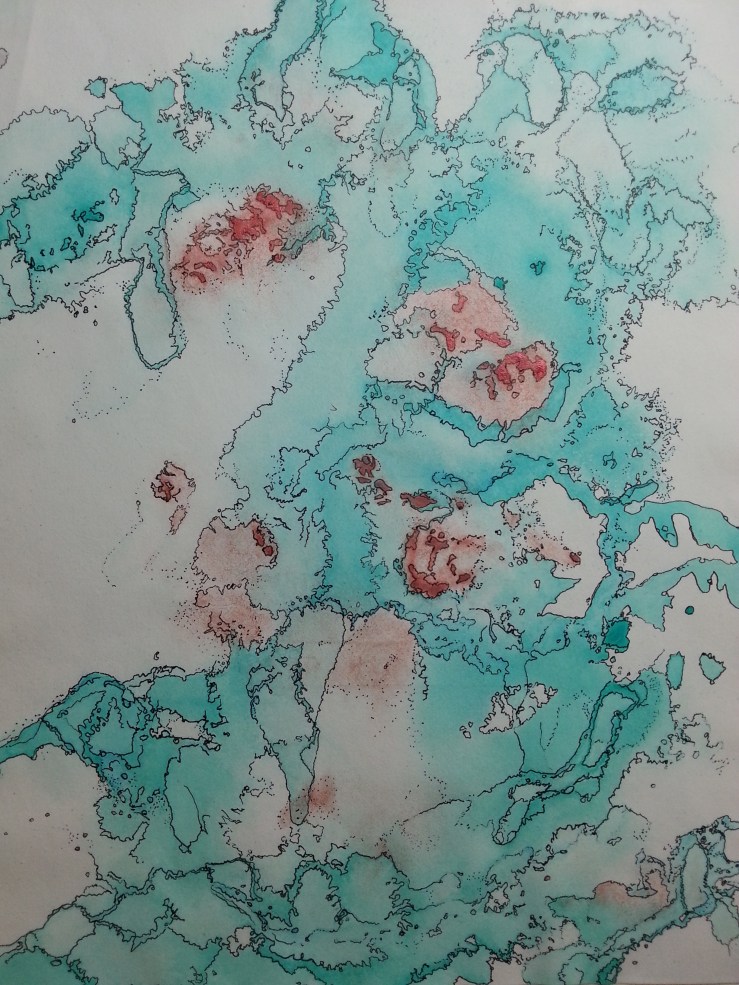
After leaving China and back in my studio I began experimenting with the scale, increasing in size and including new media, such as metallic powders and inks. The drawing below represents copper the first metal ever manipulated by humans, and the color of its patina as it oxidizes.
drawing in copper

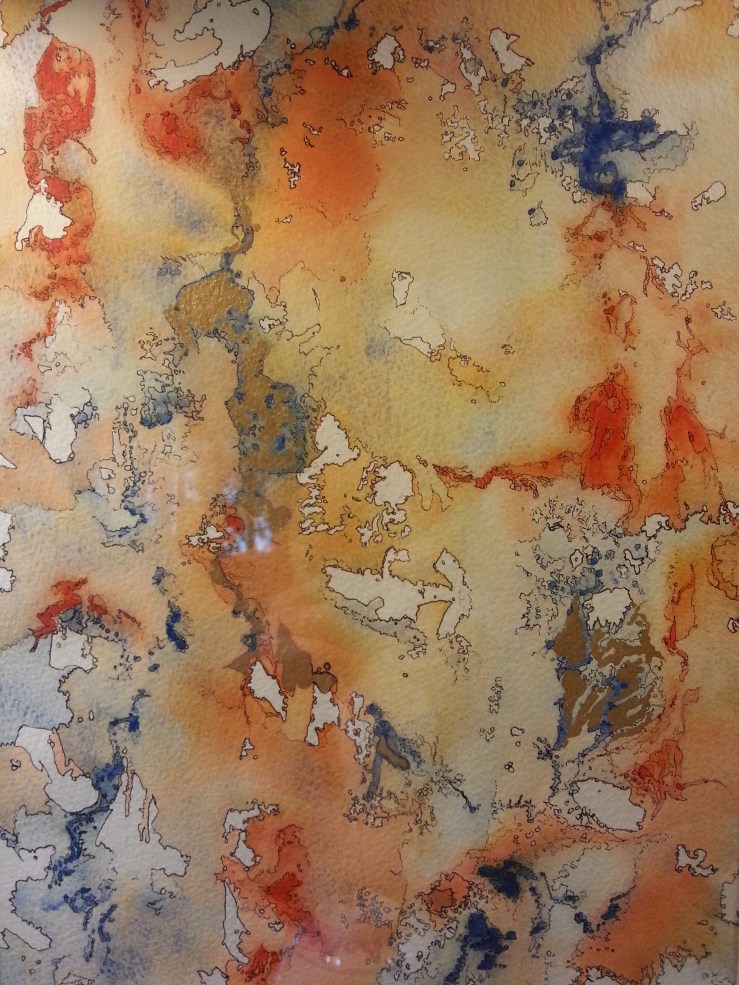
The orange and blue drawing below was inspired by a memory of watching goldfish splashing in a torrent of water in the pond at Xichan Temple in Fuzhou, China. This drawing was exhibited in Harlan Gallery, Seton Hill University 2016.
orange and blue

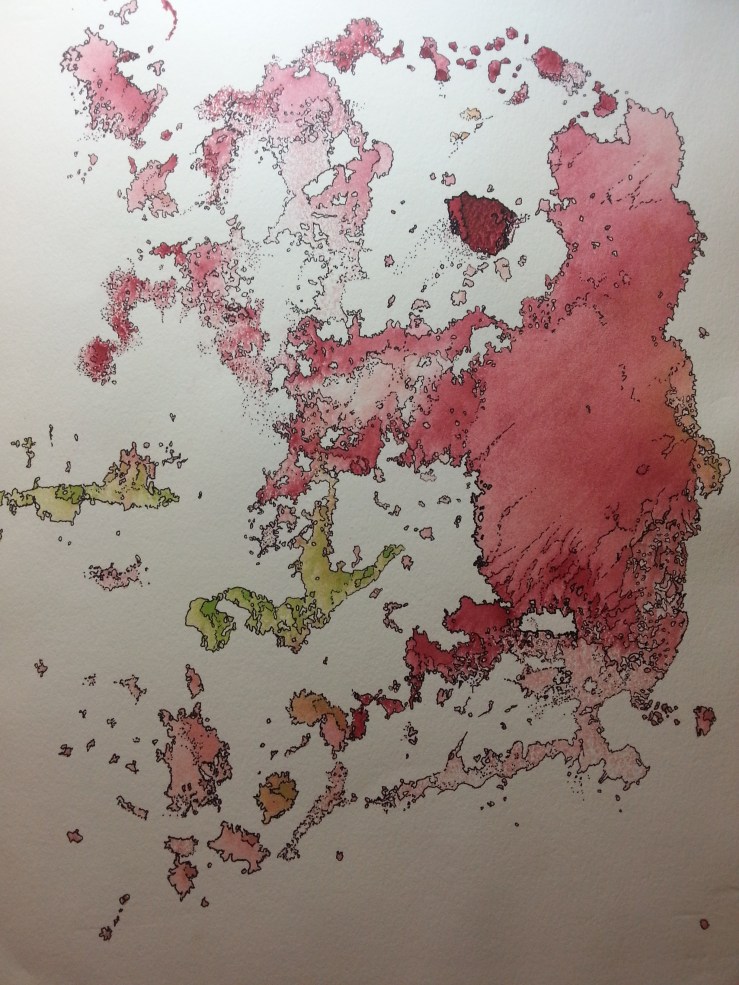
Sometimes the drawings turn out to resemble topographic maps.
continental shift

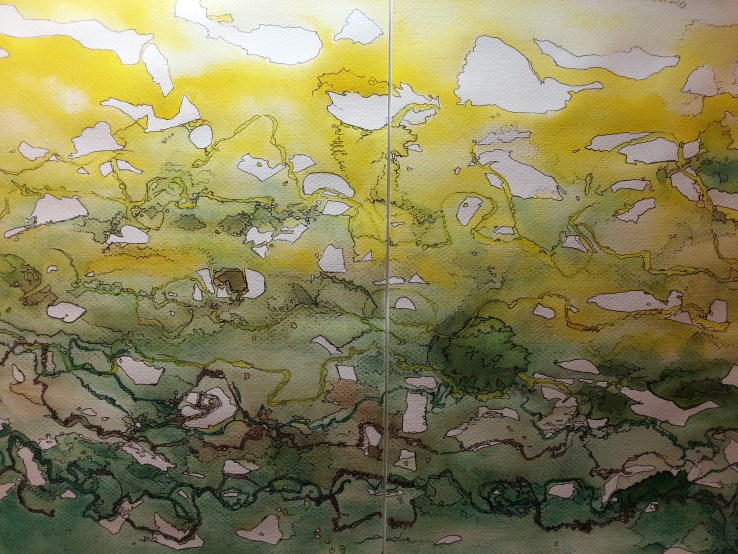
This yellow and green drawing is a diptych. The negative space dominates in this composition.
yellow and green


Sculpture

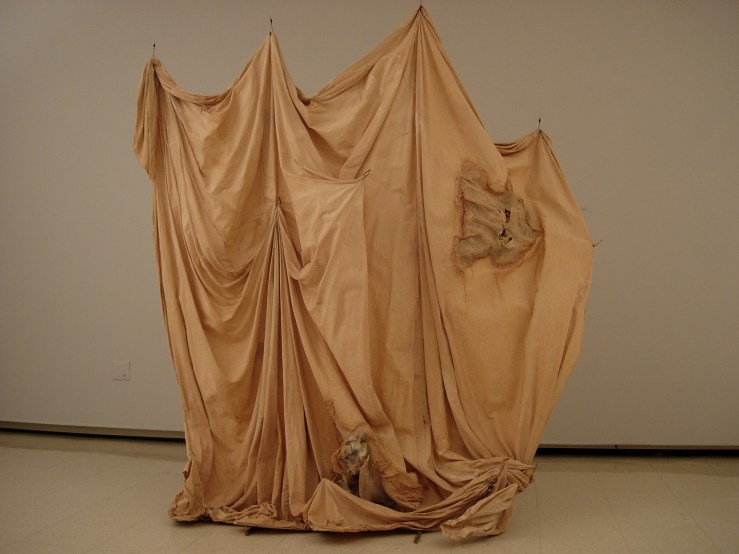
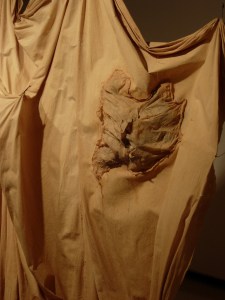
Lucid, approximately 7 feet high. Mixed media fibers, fishhooks, acrylic polymer glue and cold rolled iron support rods.

LUCID

LUCID, DETAIL


Detail of Lucid


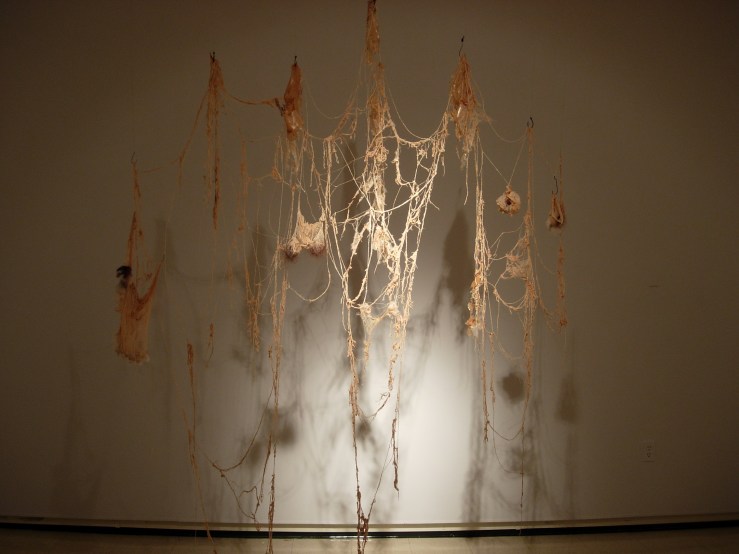
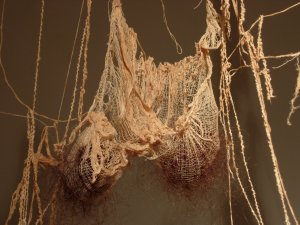
Sinew & Ganglia, approximately 8 x 10 feet. Assorted fibers, fishhooks & acrylic polymer glue. The cast shadows are an integral part of the sculpture.

SINEW & GANGLIA

DETAIL OF SINEW & GANGLIA Detail of Sinew & Ganglia

CERAMICS

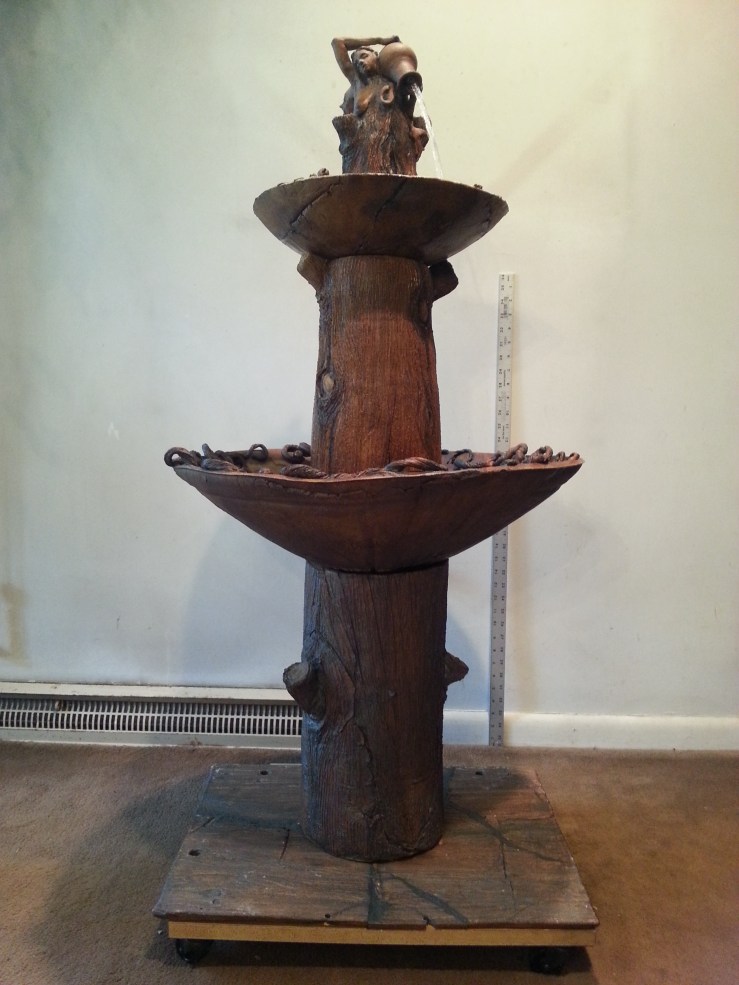
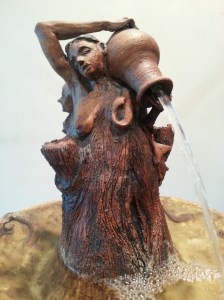
Fountain. Total height over 3 feet. Wheel thrown and hand built stoneware with an iron oxide stain.

full fountain

fountain detail Detail of fountain

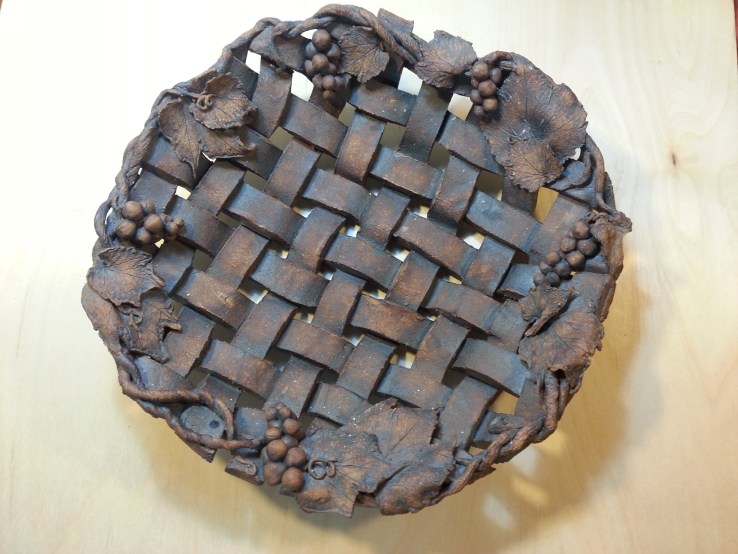
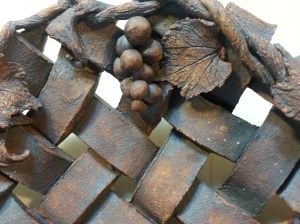
woven clay basket. Diameter 13.5 inches. Hand built, woven slab construction stoneware with iron oxide stain.

woven clay basket

detail clay basket Detail of clay basket

BOOK

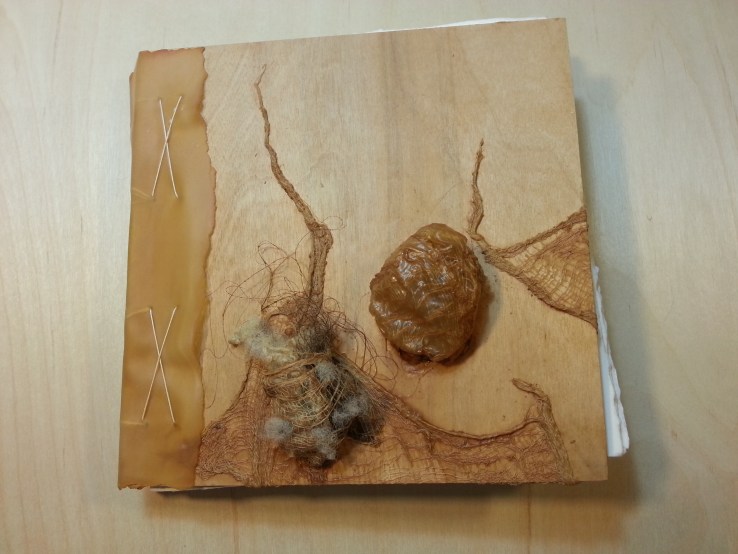
Front cover, 8 x 8 inches. Mixed media wood, latex, assorted fibers and acrylic polymer glue

book cover

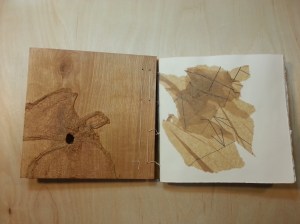
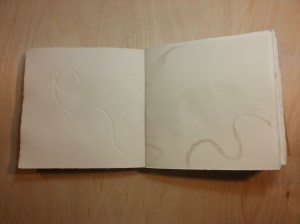
Inside front cover                                                      Embossed print and silver point drawing

inside front cover   silver point in book


To see more images of my sculptural & installation work please visit my public Facebook page fb.me/ArtTuzi 


Pick up your pencils

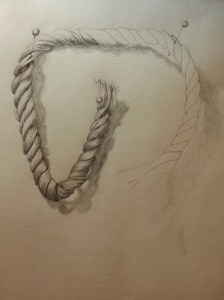
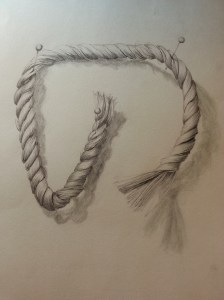
I have finally listened to my conscience – that inner nag to pick up my pencils and begin a series of drawings based on knots and cords. This was partially inspired by a book, Why Knot? by Philippe Petit. Human history has a long association with knot making out of necessity – fishermen’s nets for one – and a physical association as well – as in my stomach is in knots.  I see the cords and knots and the pins as metaphors for one’s life journey – or maybe that’s just me! Below is a work in progress and the beginning of the series, Knots. Graphite on cotton paper, 8 1/2″ x 11″

drawing-w-i-p-1116..the completed drawing..ROPE

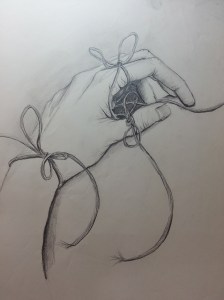
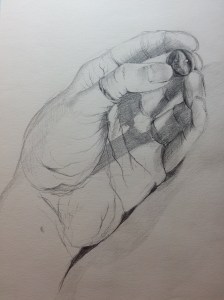
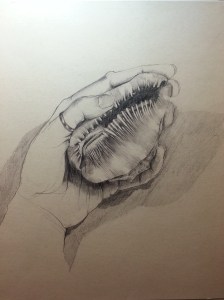
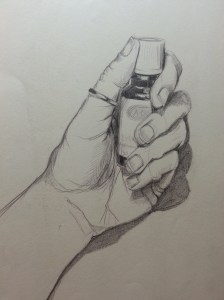
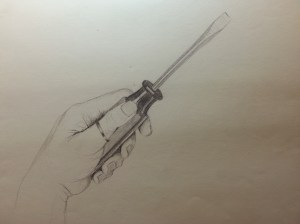
The drawings below are taken from an earlier series of Hands Holding Objects. They are all graphite on paper. The first one on the left is literally a hand tied up in bows and knots and can be considered as a transition to the conceptual nature of my newest series.

tied up in knots            glass marble

shell in hand         bottle of lavender

screwdriver in hand

A few words on drawing,

a process of placing marks in a certain order on a surface. Making marks is an immediate connection between the mind and the drawing plane. There is something primal and satisfying about that immediacy. To view a drawing is a voyeuristic glimpse into its creator’s mind. On a professional level the act of drawing requires some skill and technical proficiency. While the activity itself is a fulfilling experience for the artist, drawings that exist for the sake of exhibiting one’s skill are merely tacit exercises. The most interesting drawings have a concept, an overriding idea that initiates contemplation for meaningful engagement between artwork and viewer.

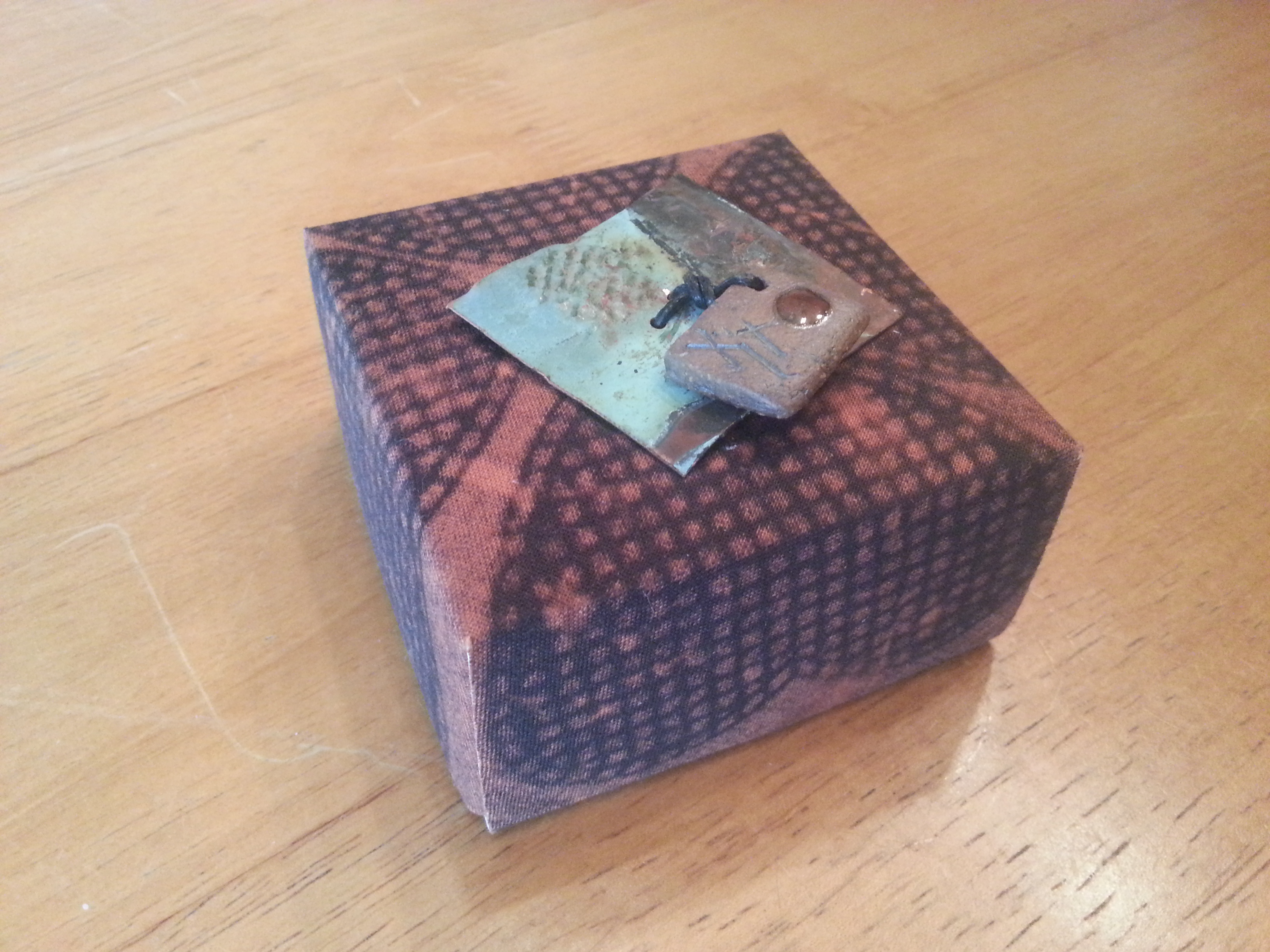
Quick to Make Gift Box – combines your own manipulated fabric with paper folding

20160312_134351

Recently I taught this technique at a POP-UP studio at the Westmoreland Museum of American Art. It was really well received by my students, because it initiates creativity and the whole thing can be completed in about two – three hours. It would be great for a DIY weekend or evening. This project was adapted from an article found in a back issue of Threads  magazine.

The top of the box is made of card stock covered with the fabric. The bottom of the box is just card stock.

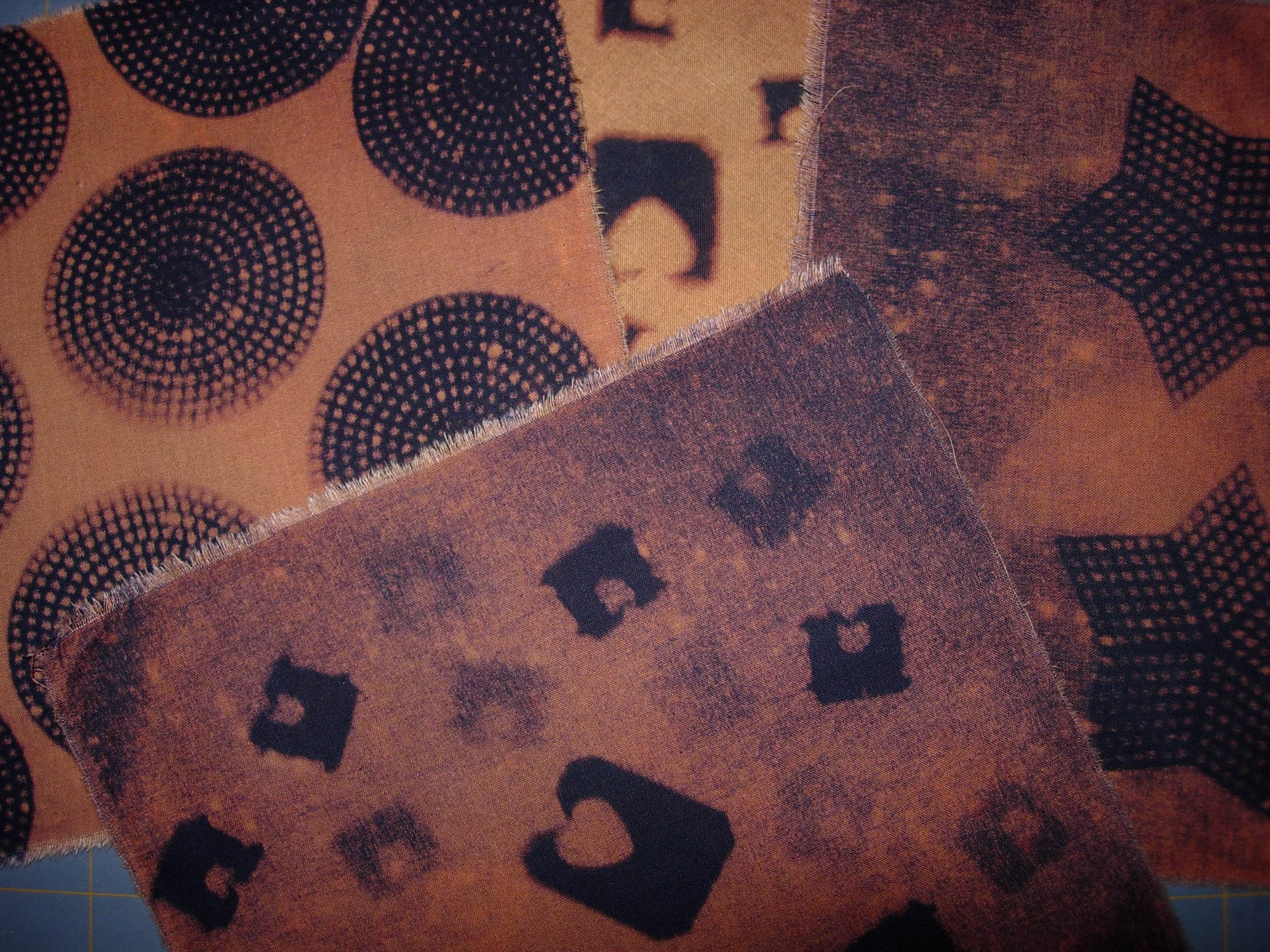
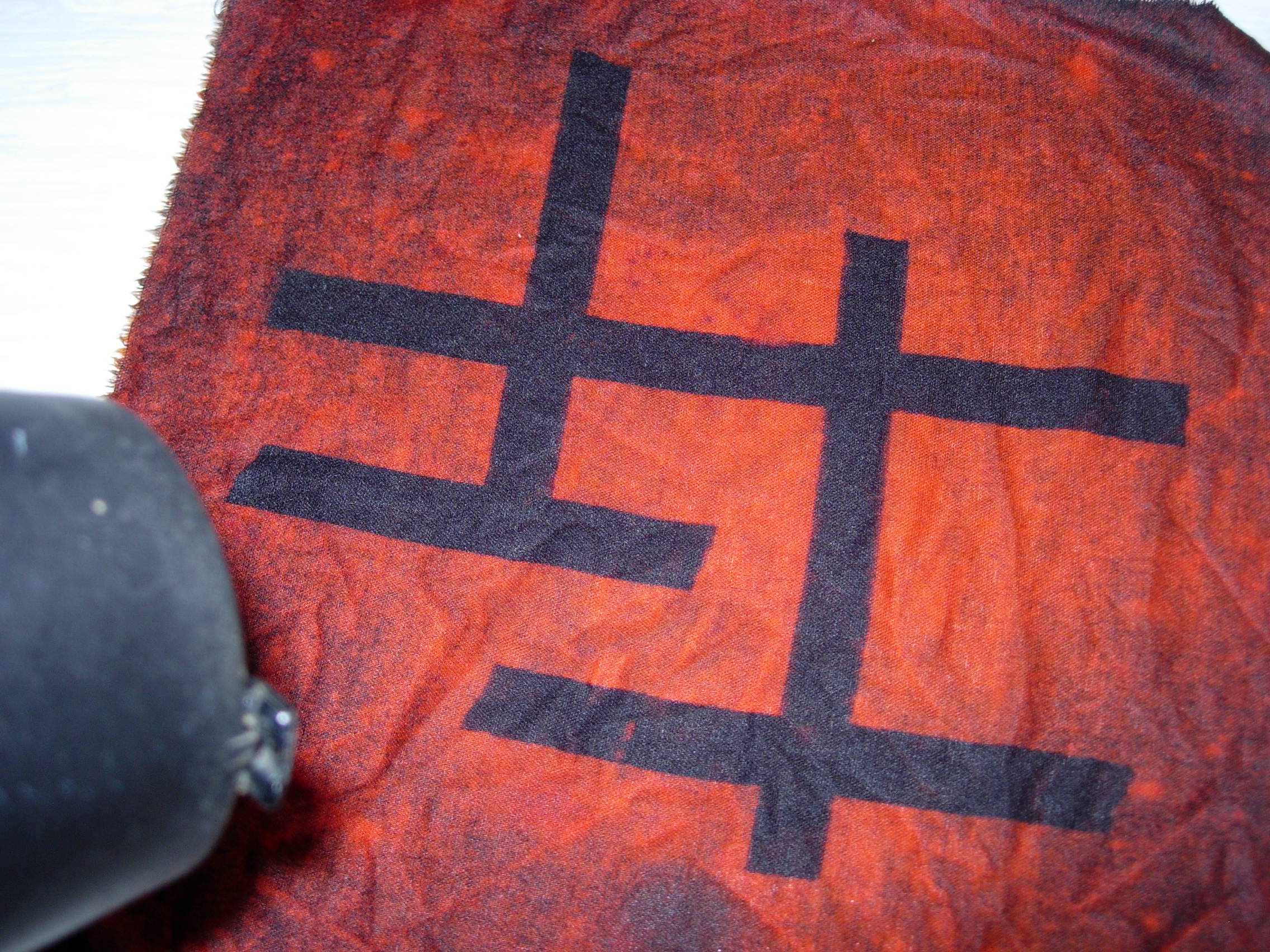
The process of removing the color from fabric is referred to as discharging. It is the opposite of dying fabric and it can be a lot of fun. There are a couple of methods to discharge fabric. This project uses chlorine bleach.

Please read all of the instructions and gather materials before beginning the project.

Start with a light-weight woven 100% cotton fabric, 45 inches wide. For one box you will only need about 1/4 of a yard, but you will want more for experimentation. I used black, but any dark color is acceptable. Experiment on a scrap first as different colors will give unpredictable and varying results.

Wash and dry the fabric. Do not use any type of fabric softener at all as it will coat the fibers of the textile and interfere with the discharging process.

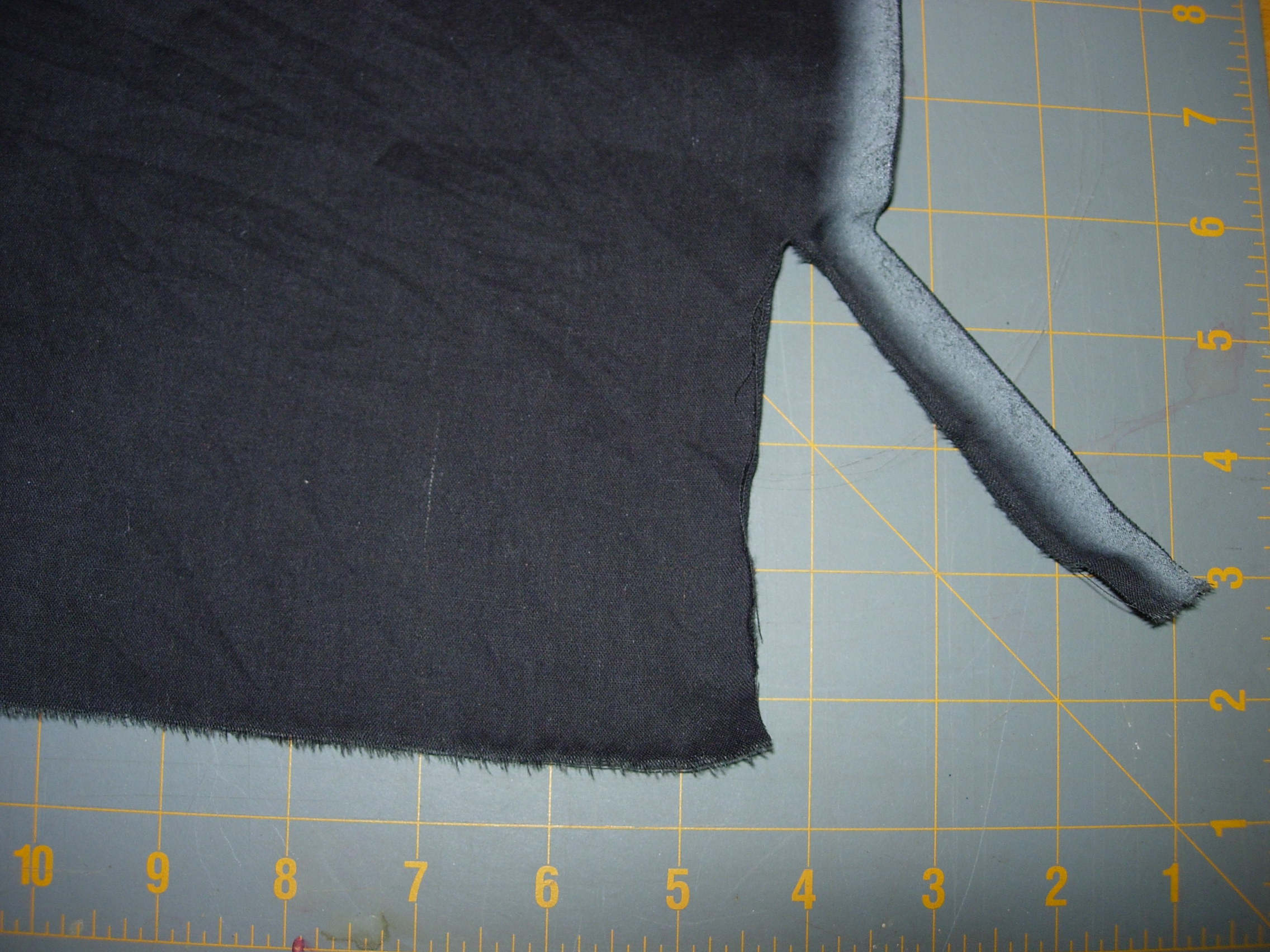
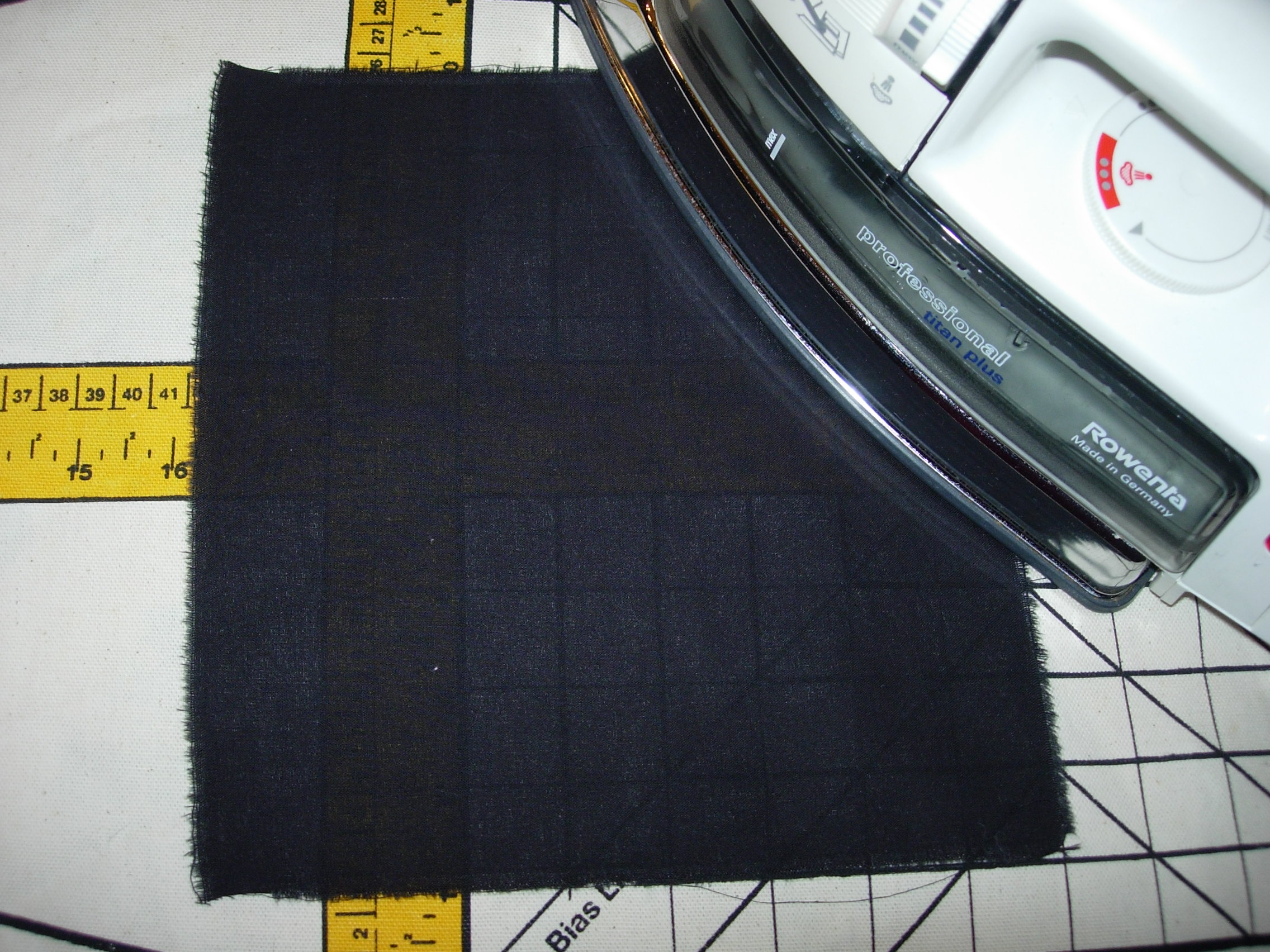
Clip and tear both the selvage edge, and the cut edge of the fabric.Tearing places the fabric on its grain and maintains straight lines. Then measure 8 1/2 inches over from one of your straight edges, clip and tear the fabric. Measure 8 1/2 inches again, clip and tear to create a square.

Press with a hot iron.

DSCN2681DSCN2690

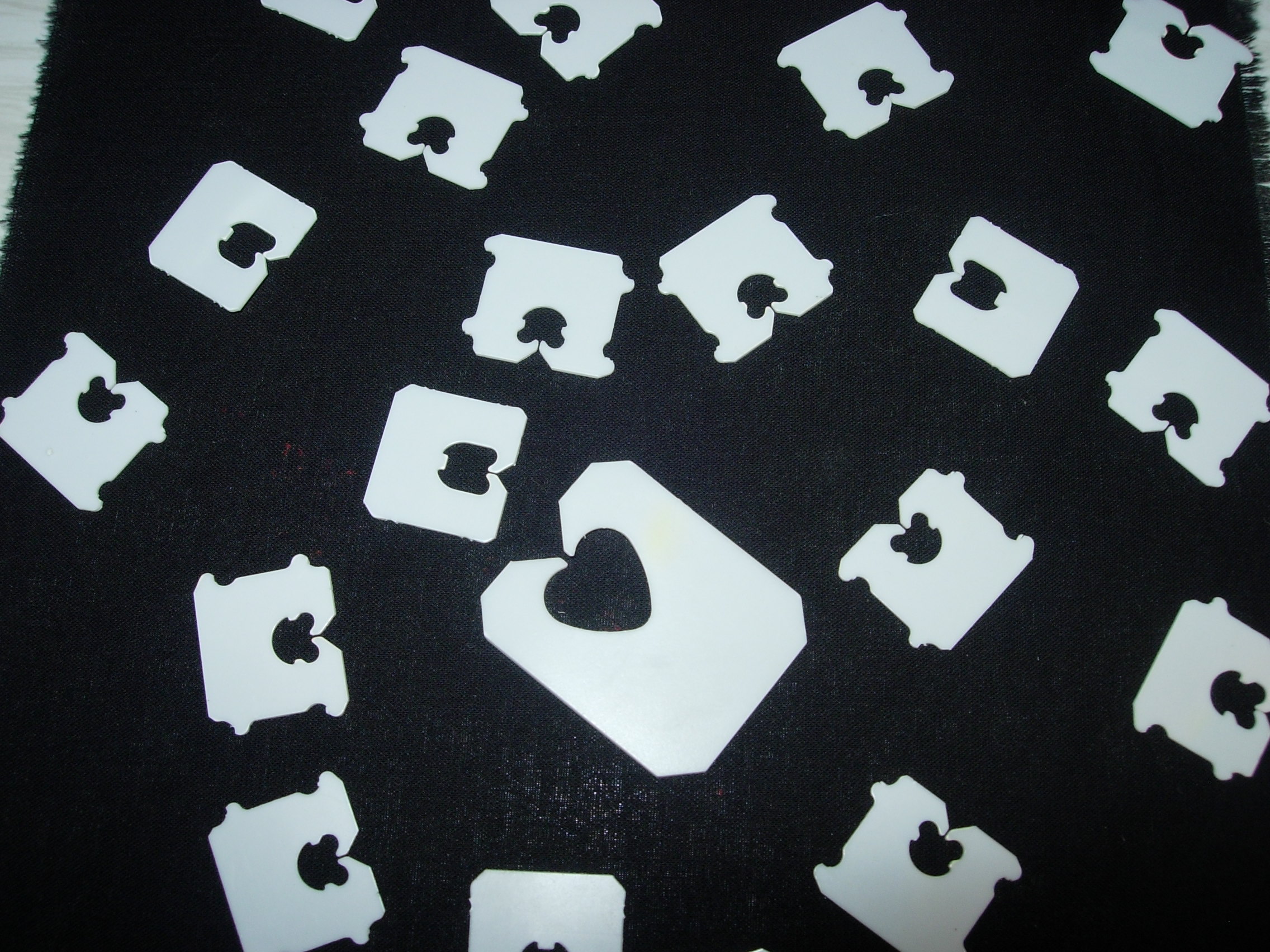
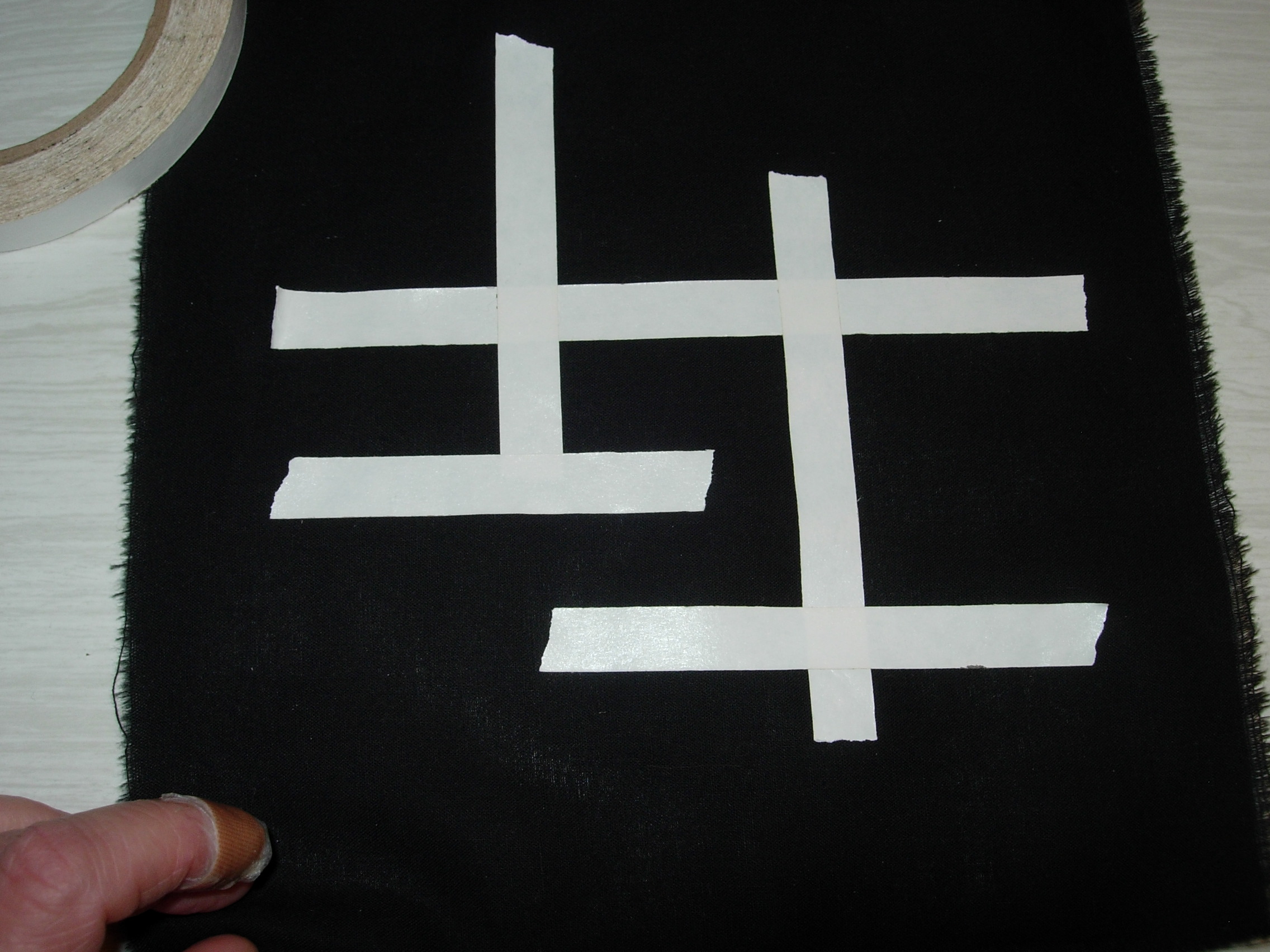
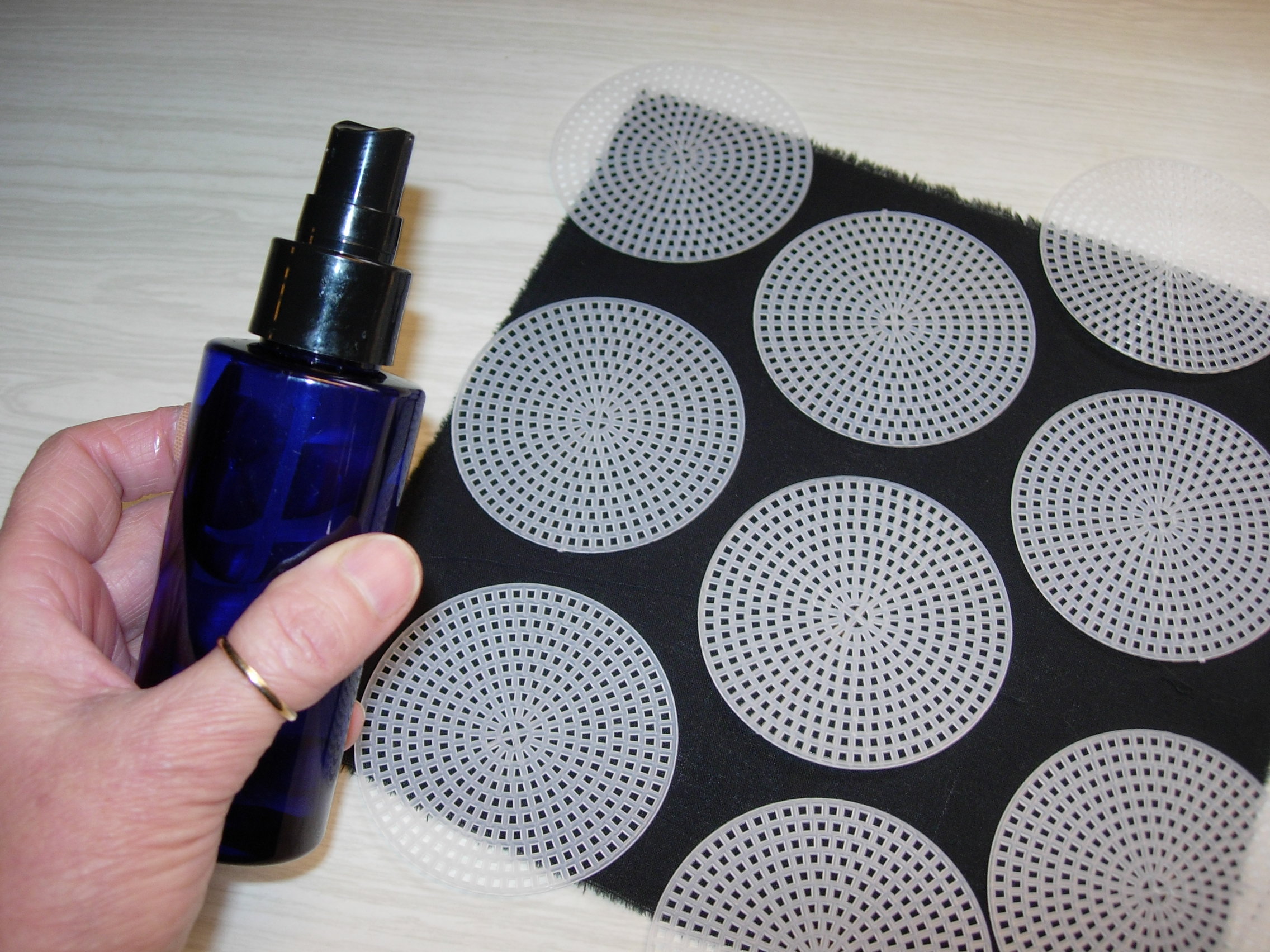
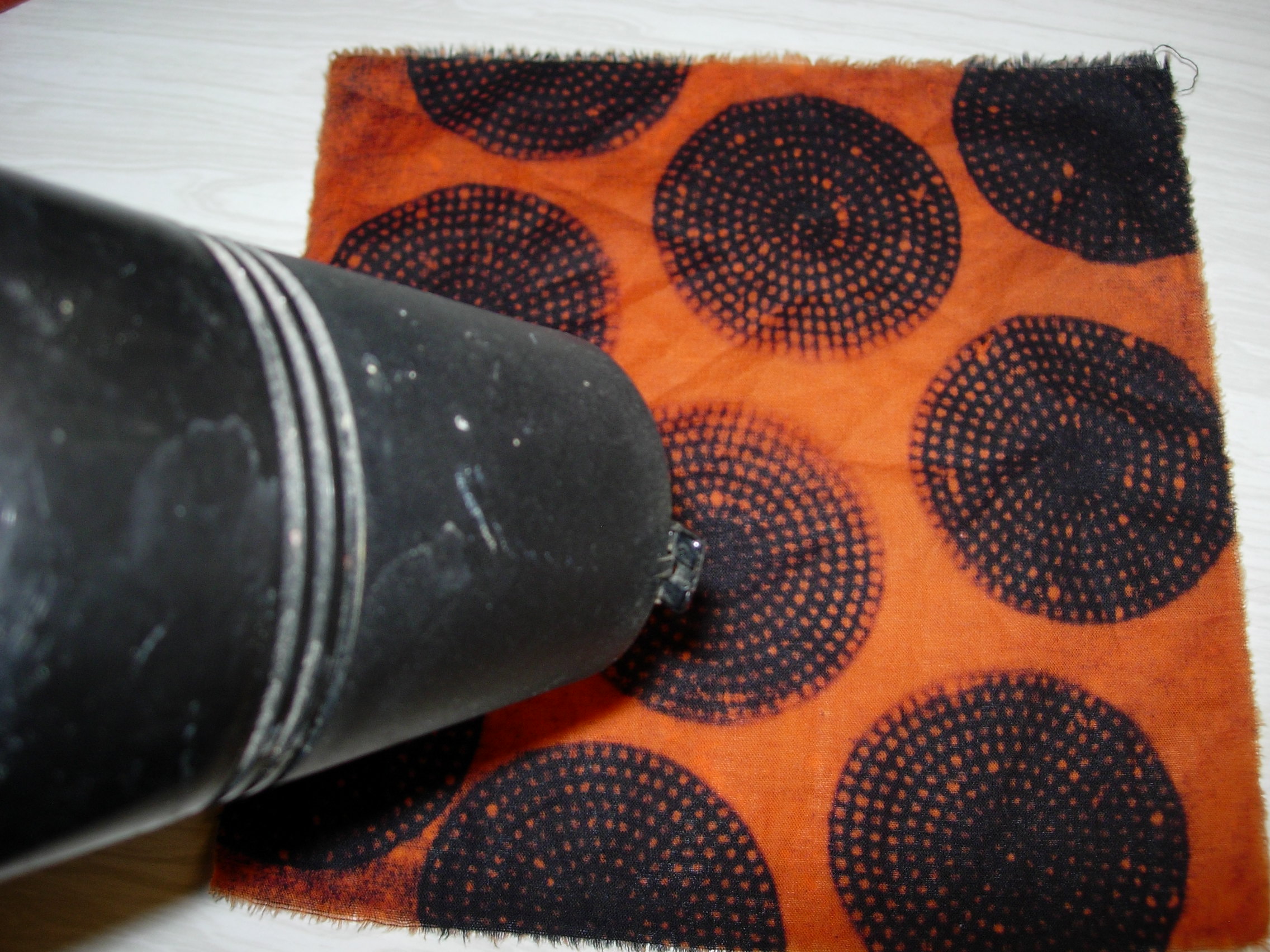
Next you will need some kind of stencil. I experimented with those plastic clips used to close bread bags, masking tape, as well as plastic canvas used for cross stitch projects. These all worked well, but you can use almost any stencil.

DSCN2695 DSCN2713

DSCN2715DSCN2716

A common sense safety note for using chlorine bleach: Make sure that you work in a well ventilated area as the bleach can be an irritant. Protect your clothing and the surrounding area of your work space from any possible damage from the bleach. Use dishwashing or disposable gloves to protect sensitive skin. Do not spray the bleach near face or eyes. Do not leave the bleach unattended around children, pets, or the curious.

Carefully fill a spray bottle with Concentrated Bleach, any brand will do. Use a funnel if necessary. You can purchase a spray bottle but I recycled one that produced a fine mist. If you recycle a bottle make certain that all the contents are thoroughly washed out of the bottle as well as the spray tube and nozzle to prevent any interactions with the bleach.

When you spray the bleach onto the fabric, the color will usually change very rapidly depending on the dye used in the manufacture of your textile. Experiment on a small scrap of your fabric before beginning your project to see how fast the color will discharge from your particular fabric.

When you are ready place your stencil on your clean and pressed 8 1/2 inch fabric square. Keep in mind the center of the fabric is the center of the top of your box. The edges of the fabric will be inside of the lid.

When you spray the bleach onto the fabric be consistent with your spray pattern. Not too heavy in one area, but an even allover mist is your goal.

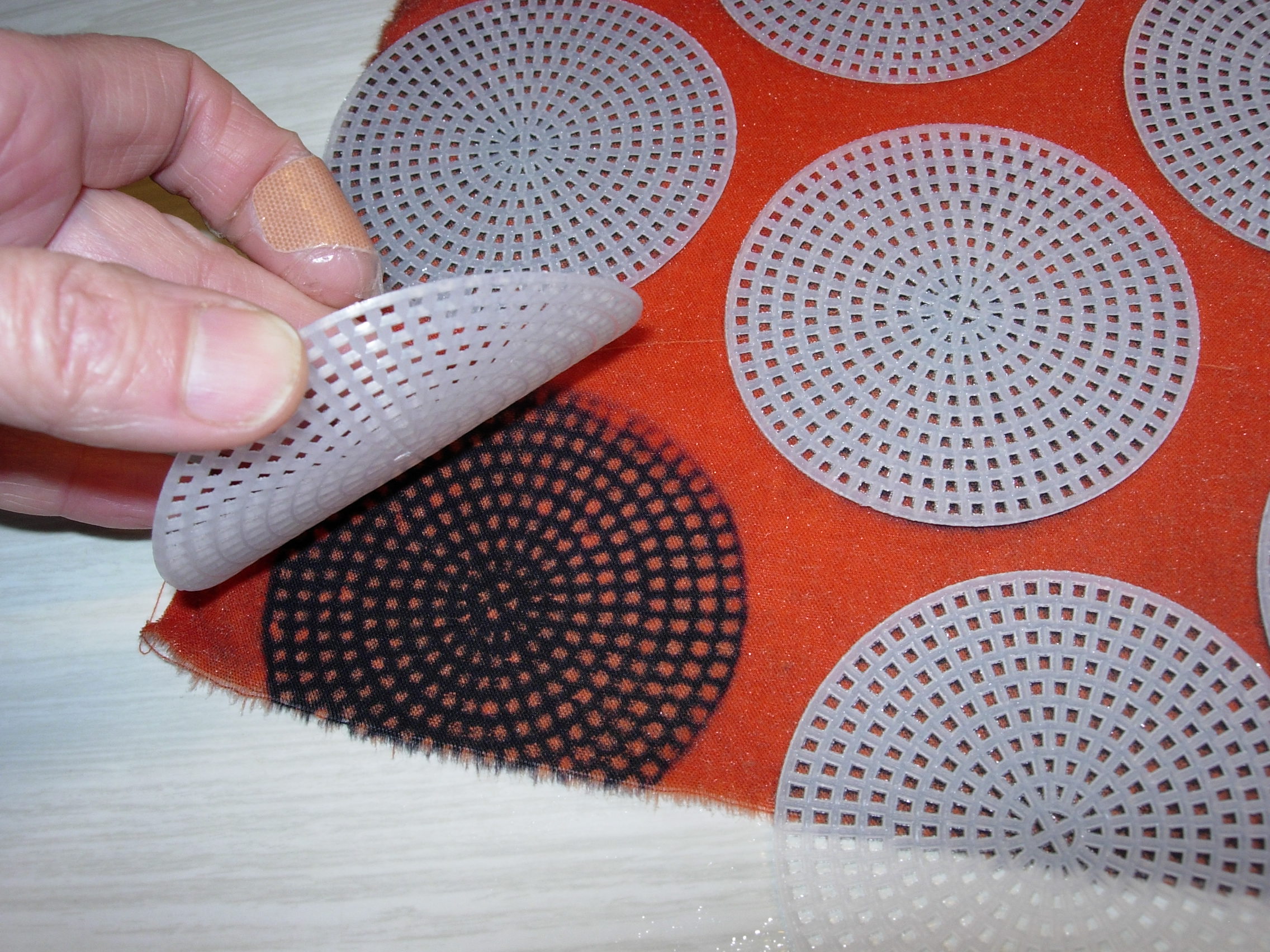
Carefully without moving it, lift the edge of your stencil and peek to see how things are going. You may need to spray the bleach a second time.

DSCN2692DSCN2697

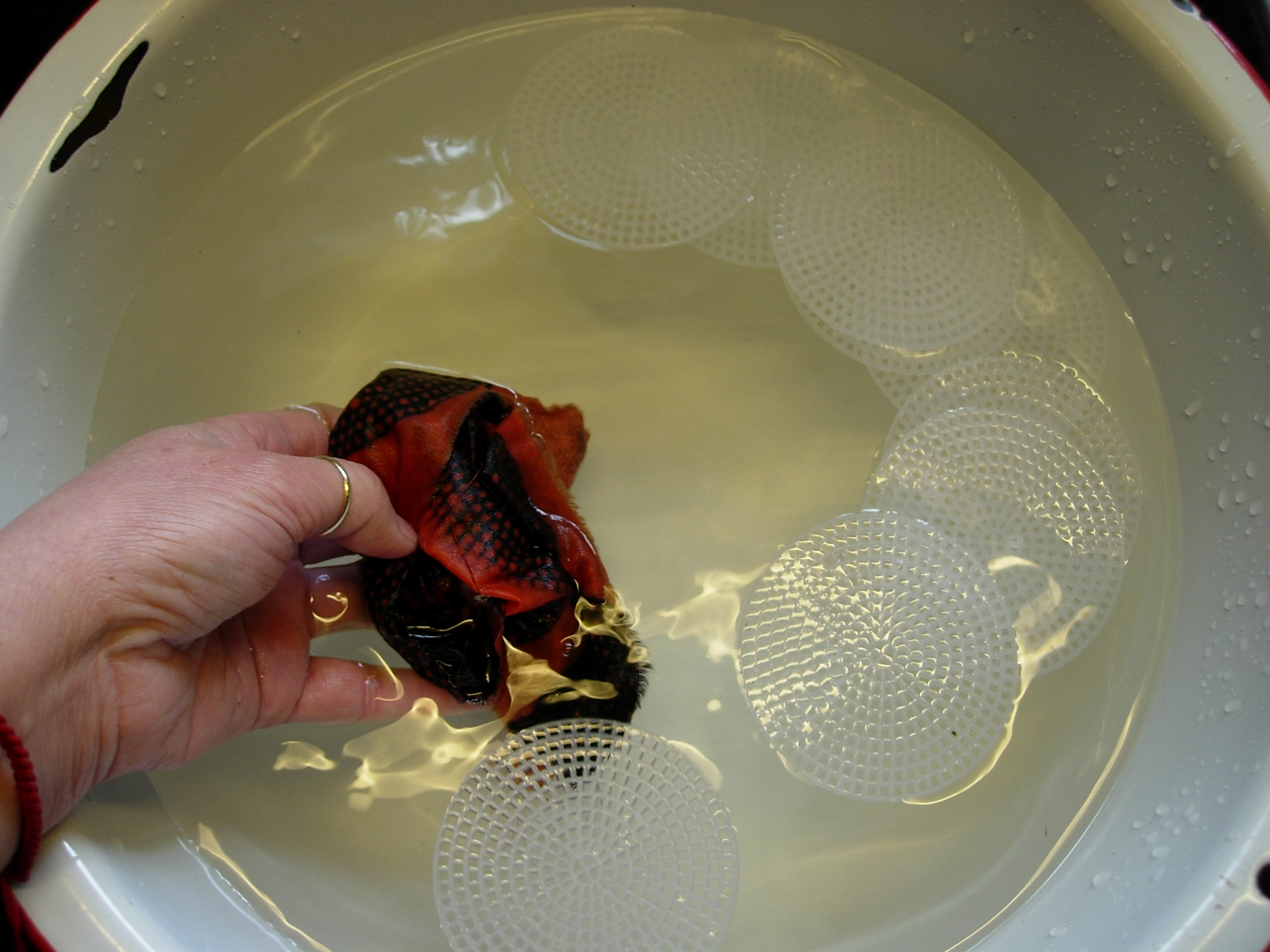
When you are happy with the result, rinse the fabric and your stencils in several cycles of clear water to remove the bleach.

Remove and completely rinse the bleach out of the spray bottle when you are finished.

Dry the fabric and press with a hot iron.

DSCN2698DSCN2711

For the lid of your box, you will need: fusible web such as Heat N’ Bond or Wonder Under, card stock, and your fabric, all  prepared to 8 1/2 inch squares.

The card stock can be any color of your choice.

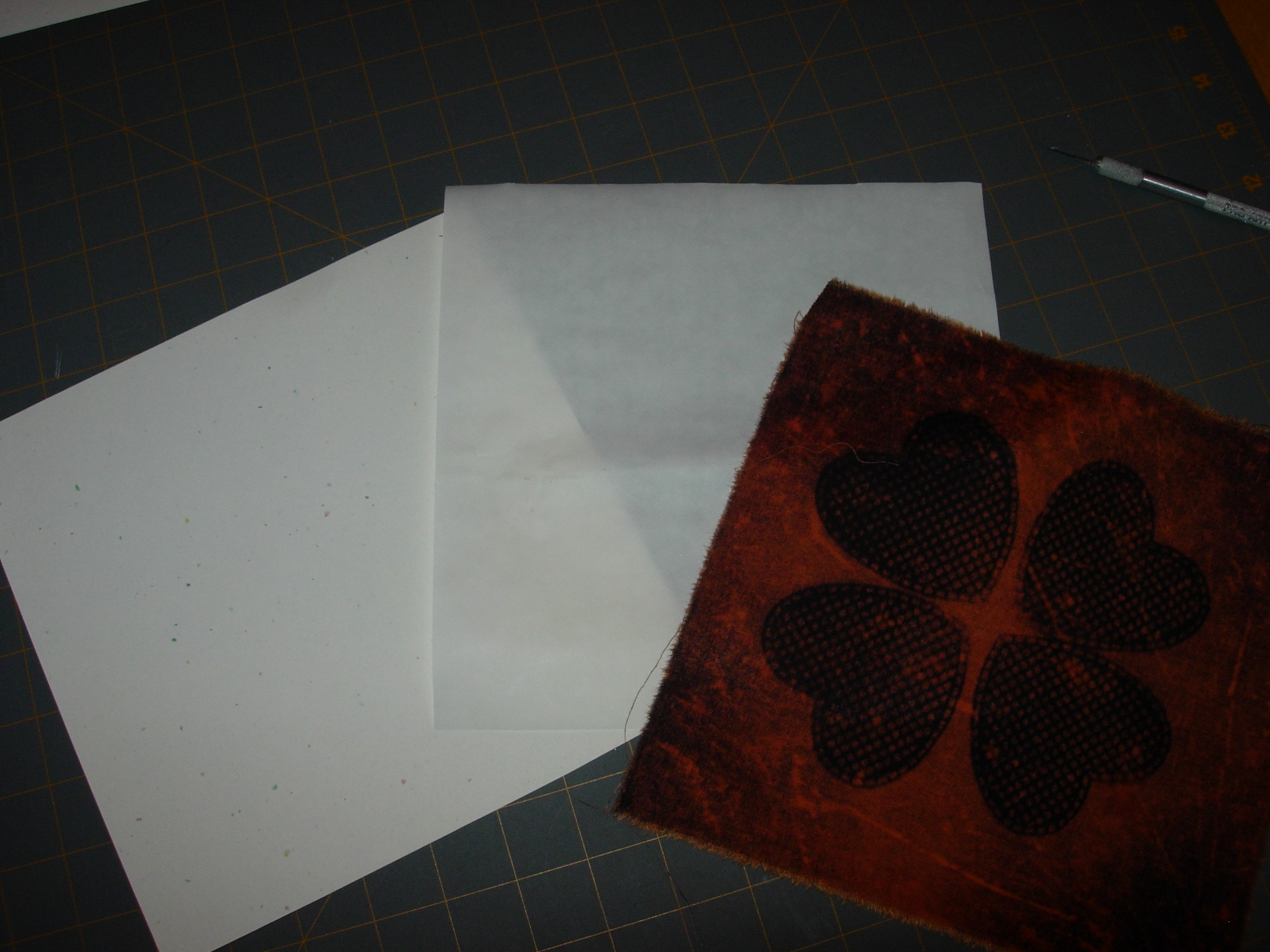
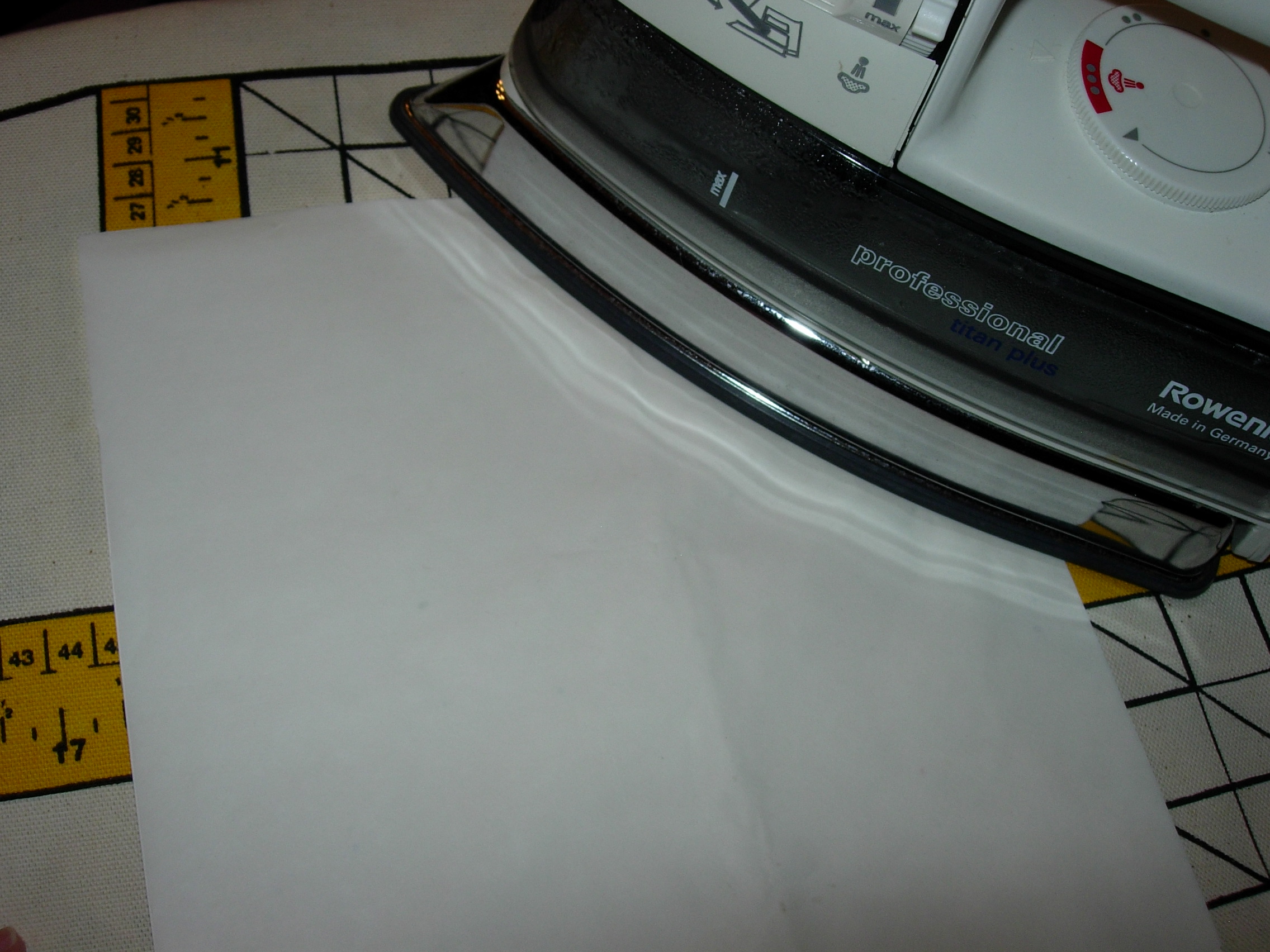
Following manufacturer’s instructions for your fusible web, press the web onto the 8 1/2 inch square of  card stock. Make sure the fusible web is paper side up or you will fuse to your iron. Once cool, carefully peel the paper side of the web away. Then press to fuse the card stock to the fabric. You will end up with a kind of fabric, fusible web, card stock ‘sandwich’.

DSCN2721DSCN2723

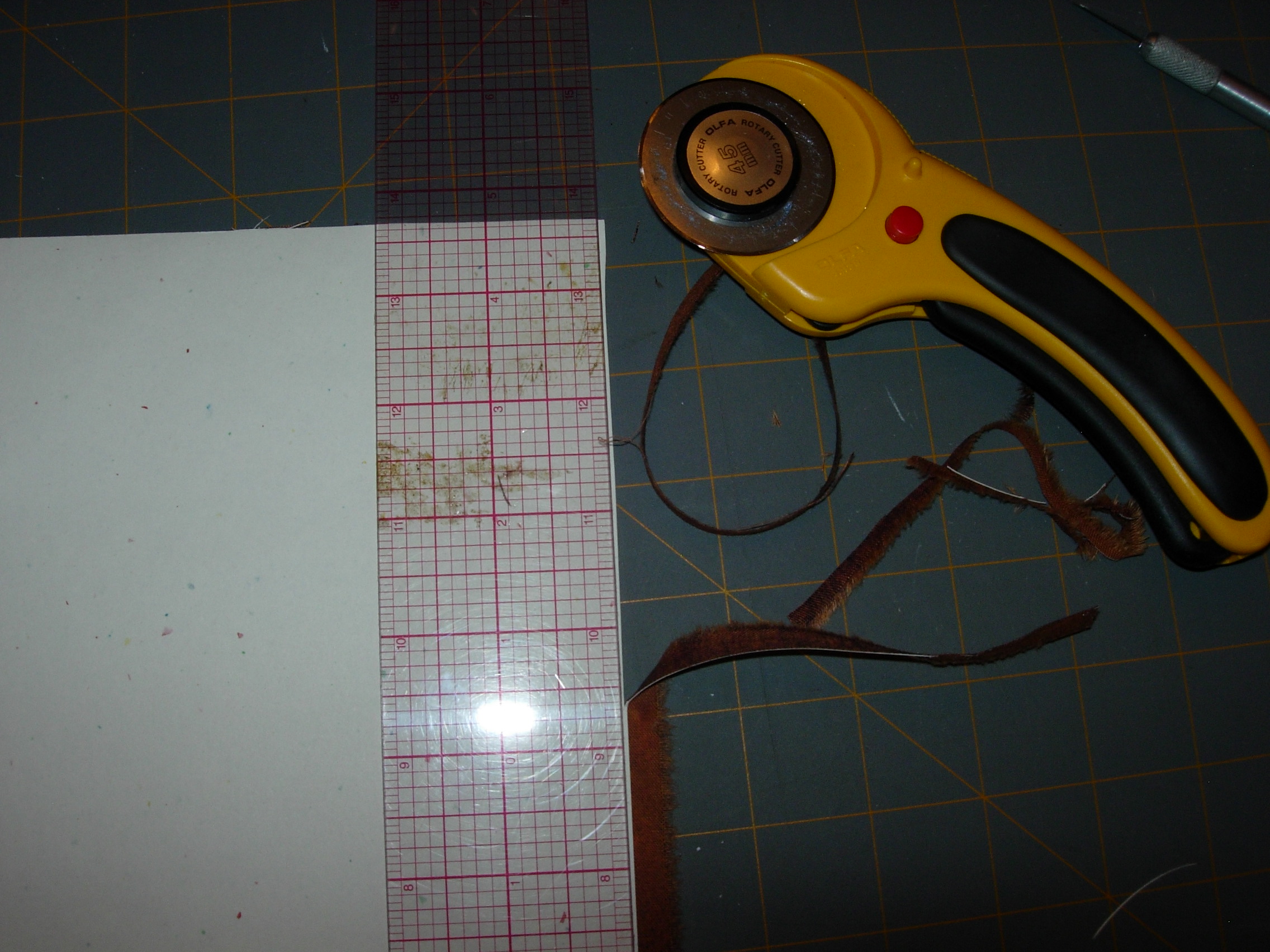
Trim the edges so that all three layers of your fabric, web, card stock ‘sandwich’ are even. Cut carefully to maintain your perfect 8 1/2 inch square. A ruler and rotary cutter work best for this.

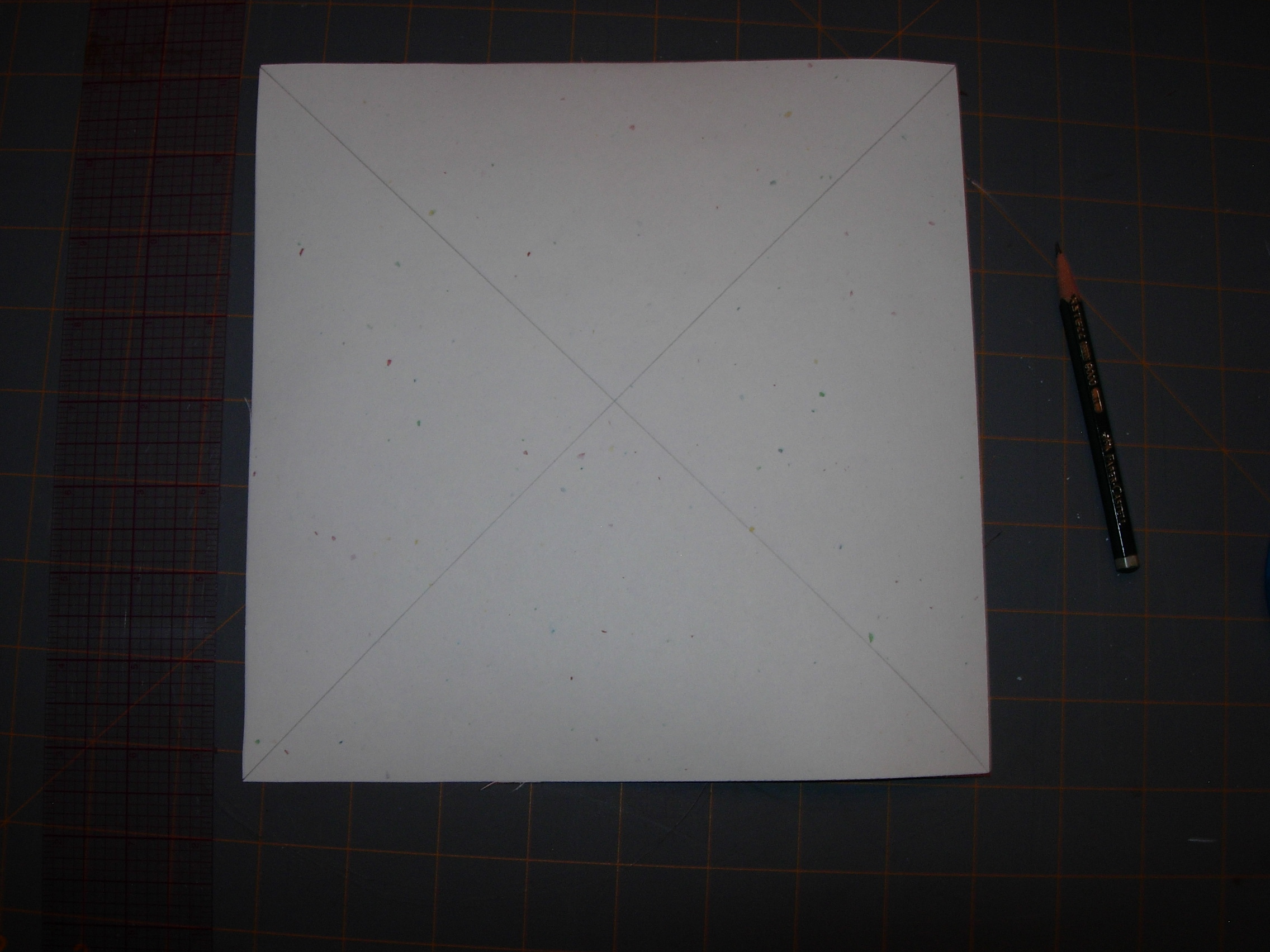
FOLDING THE LID OF THE BOX: on the card stock side, use a pencil to lightly draw a line from corner to corner, creating an ‘x’.

DSCN2727DSCN2728

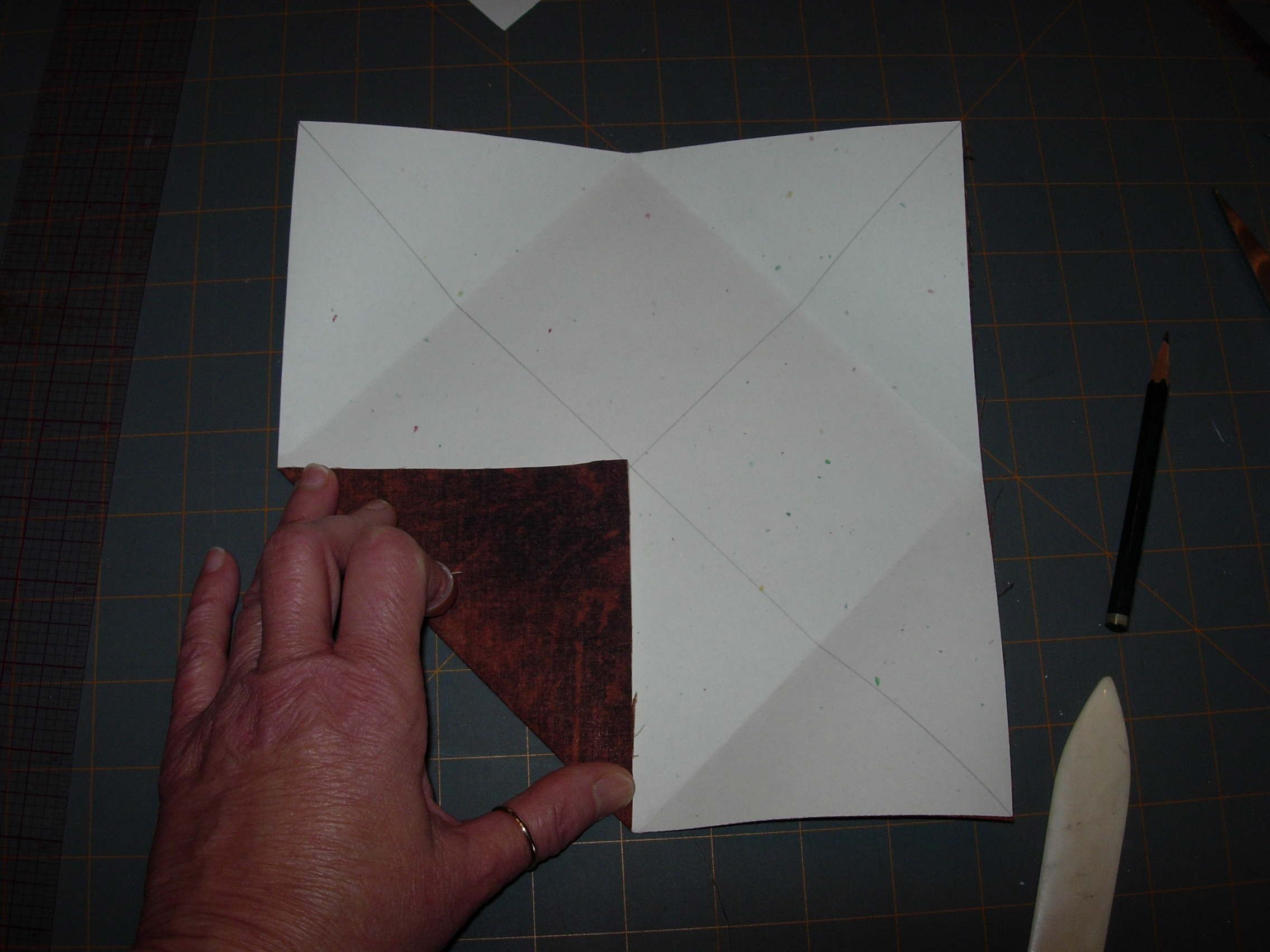
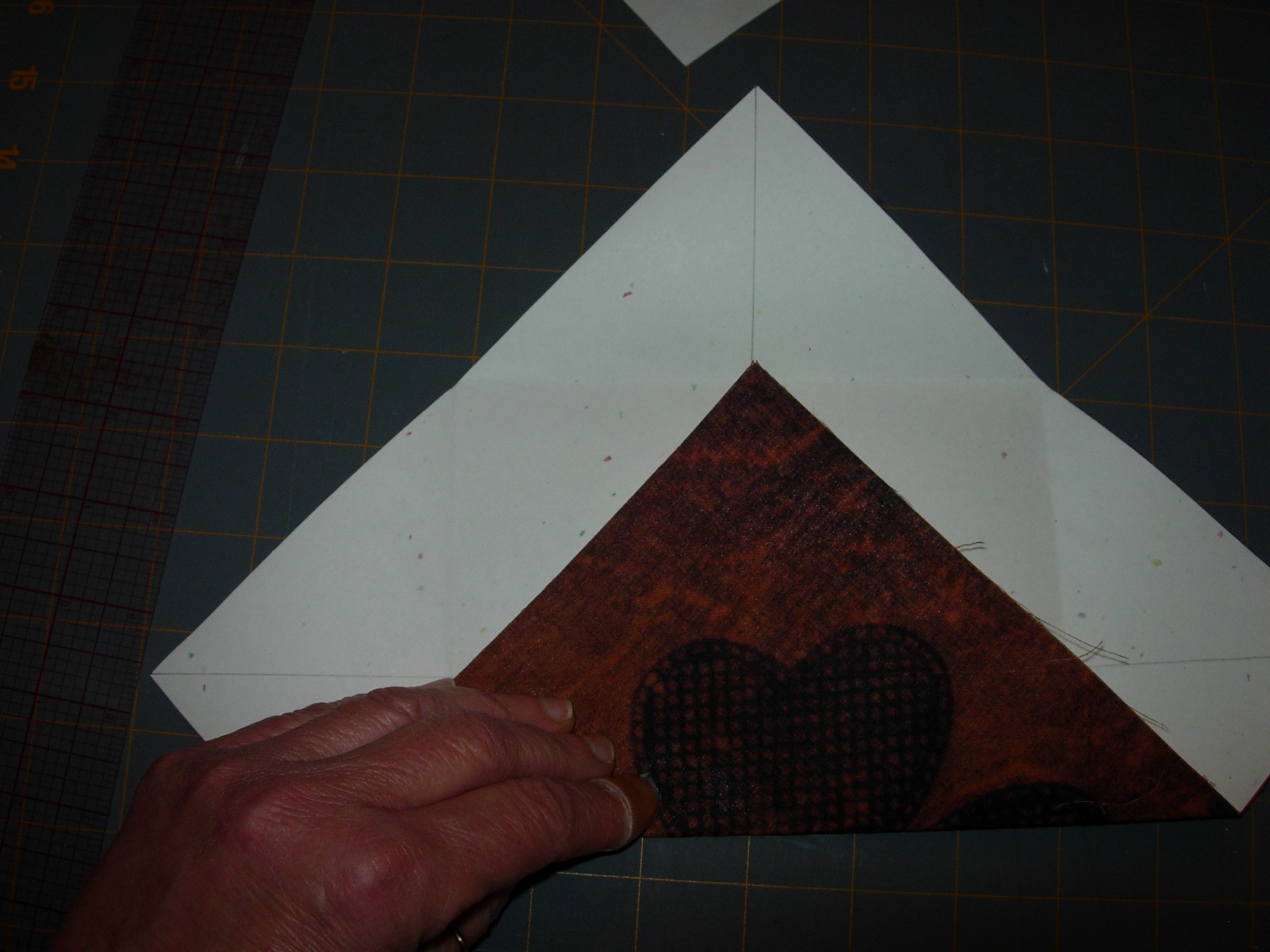
Fold each of the 4 corner points up the the center of the ‘x’.  A bone folder helps to make a crisp crease.

Next fold each corner again, this time up to where the pencil line meets the first fold.

DSCN2729DSCN2730

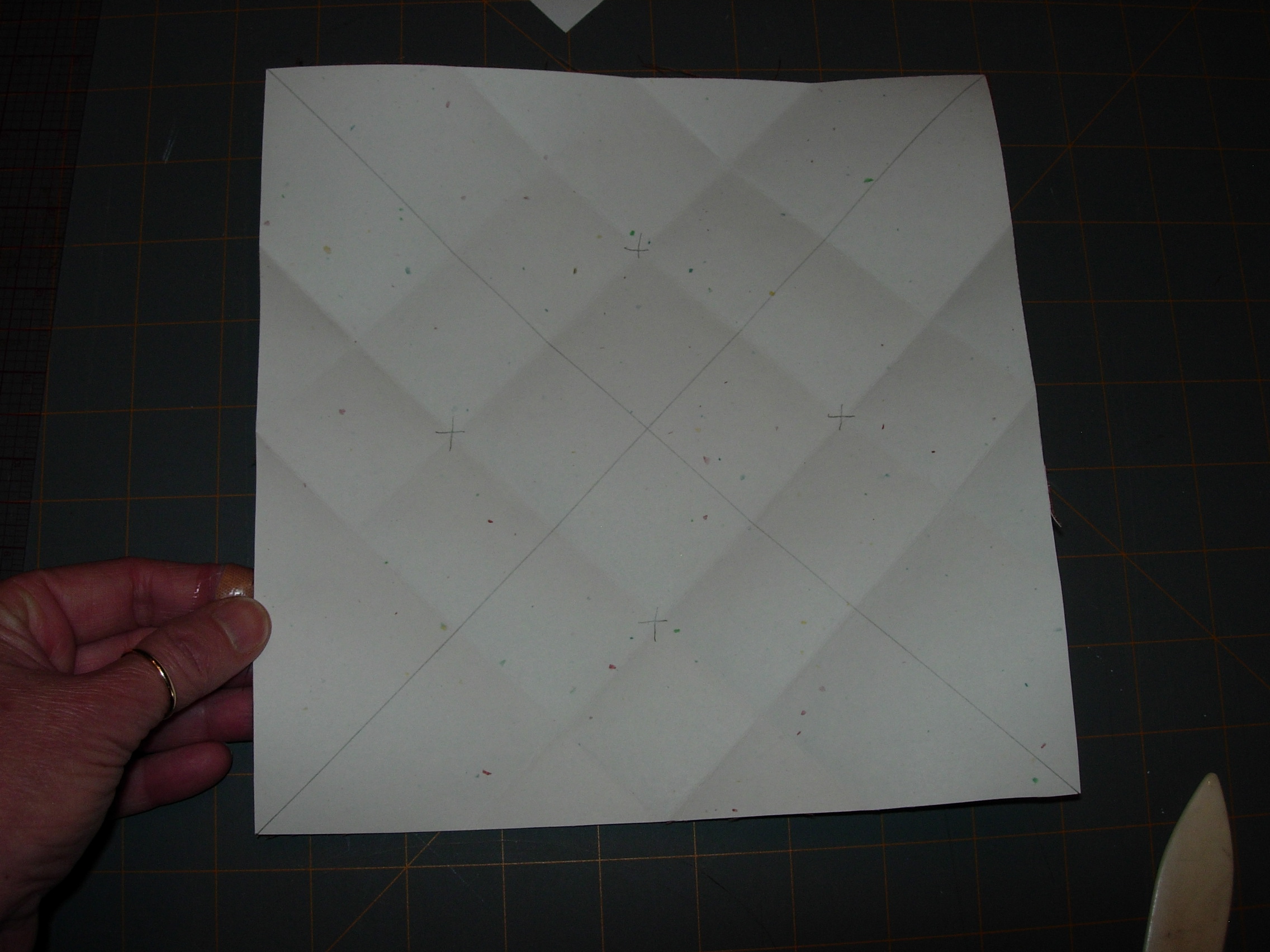
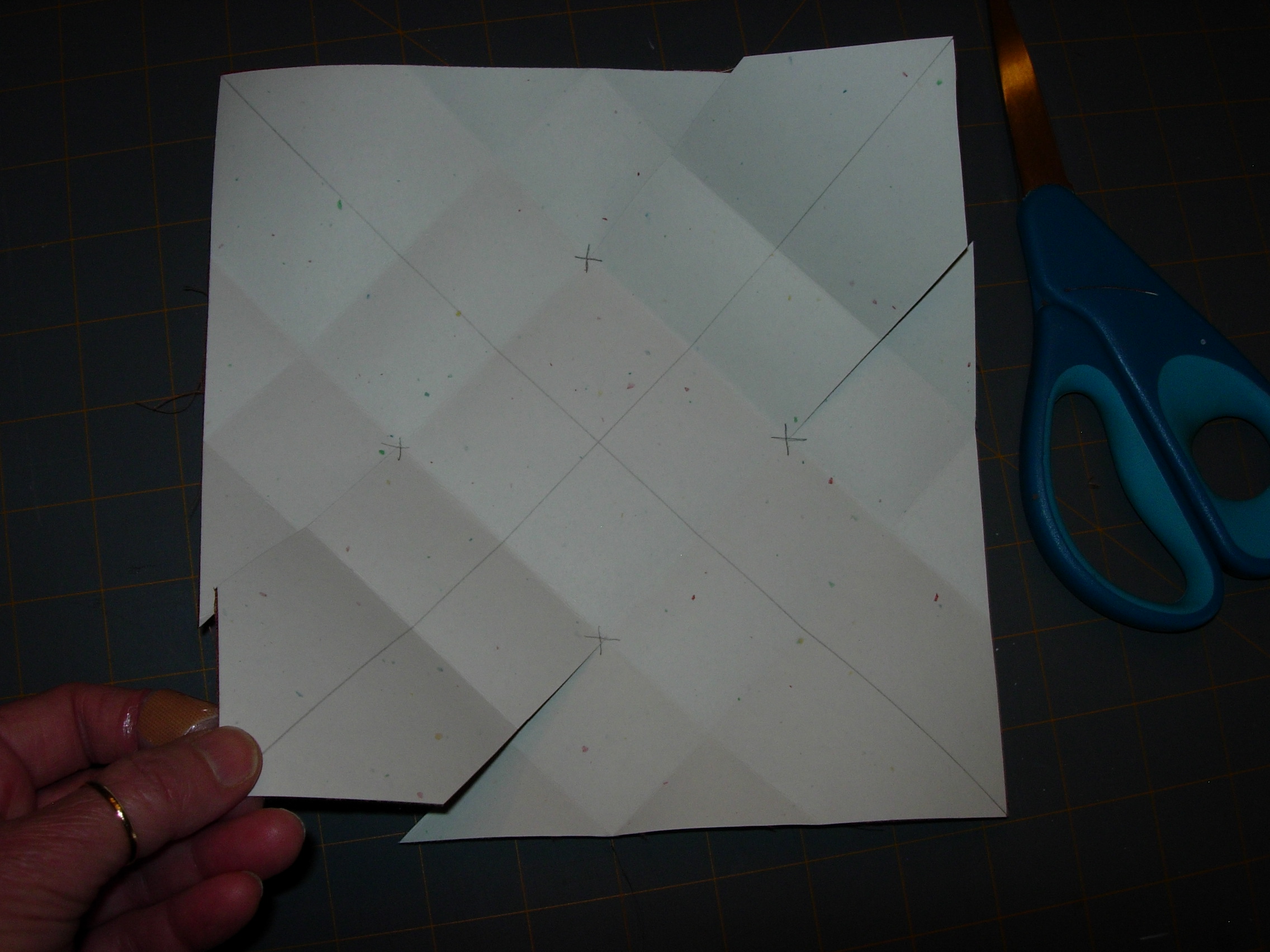
When opened out flat you should see 8 fold lines. Notice that there is a small square in the center. that small square is the inside of the top of your box.

On two opposite sides, cut with scissors up to the first fold lines. You will have four short cuts that reach up to the four corners of that middle square.

DSCN2731DSCN2733

Following the pictures below, refold all four corners on your already creased lines.

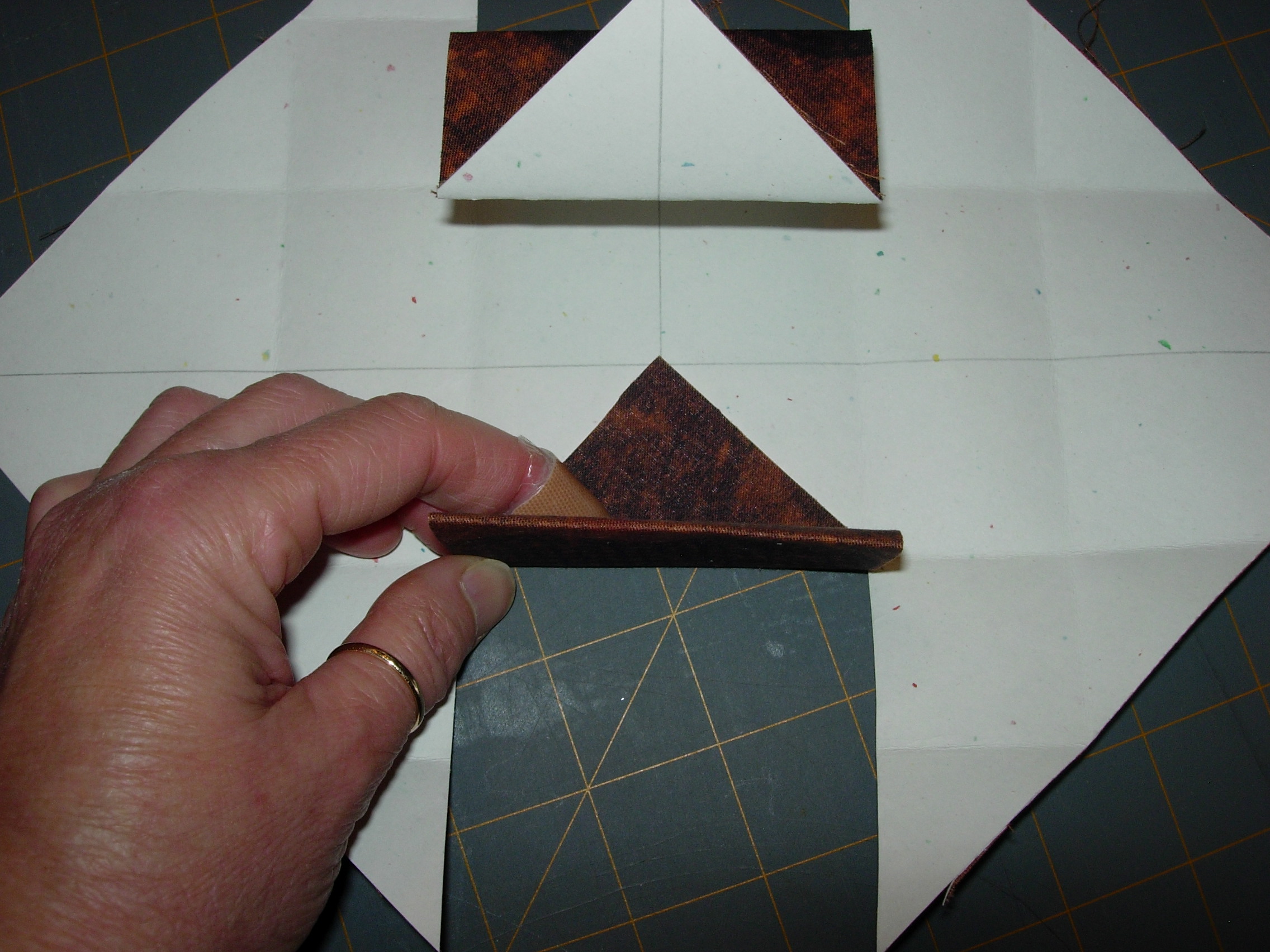
The very tips of all four corners will need to be folded backward to meet point to point inside the box top. When complete, all four points will touch to meet exactly at the center of that ‘x’ you drew with pencil.

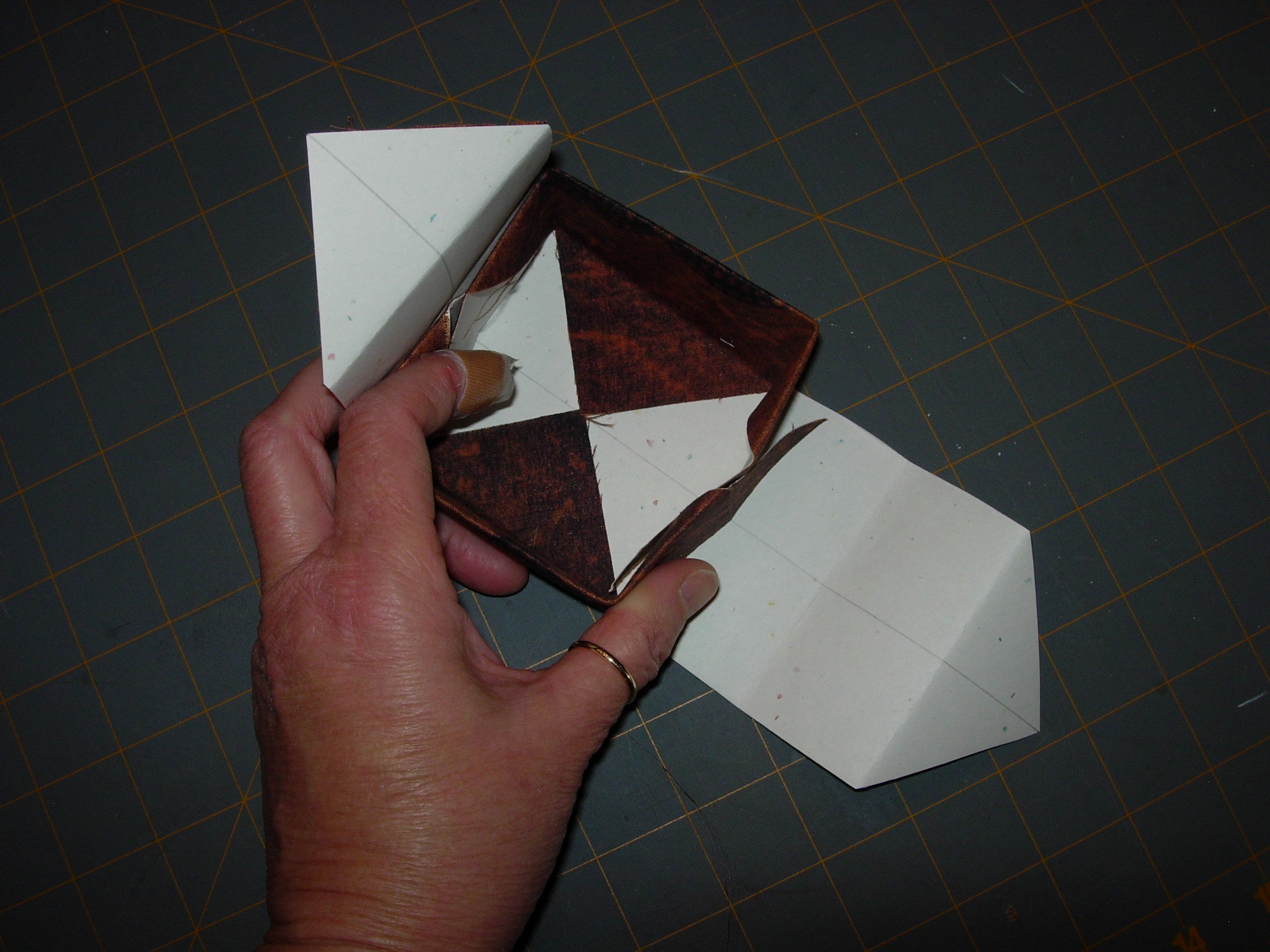
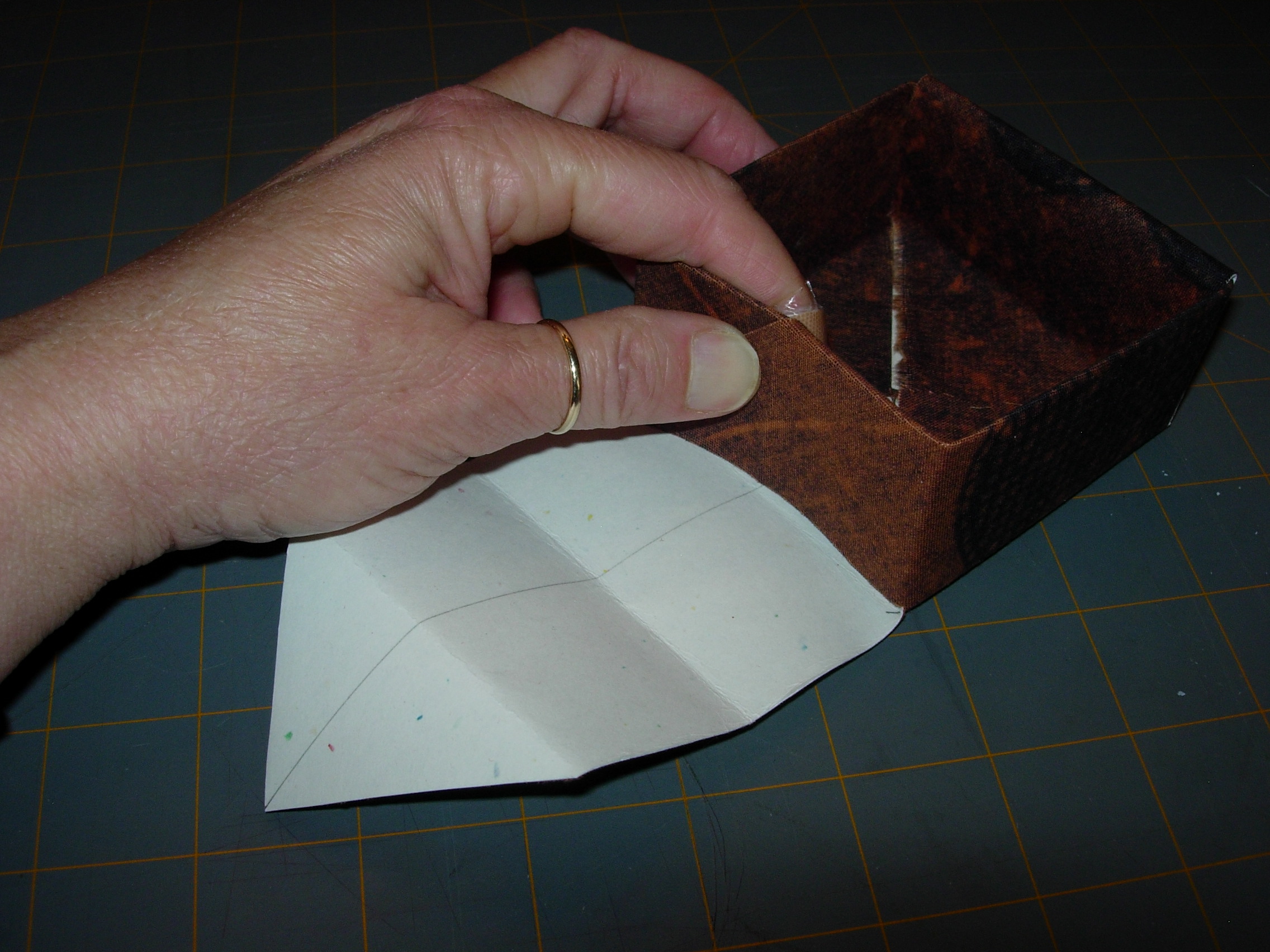
Fold the uncut sides to create flaps that wrap around. These flaps fit under and reinforce the side edges.

DSCN2735DSCN2736

Fold up all four of the edges to check for a fit.

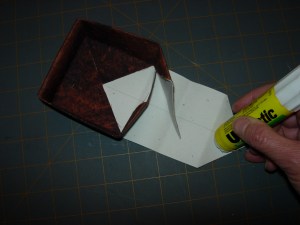
Use a small dab of glue on the four points to secure them to the inside of the box lid.

DSCN2737DSCN2739.

To create a bottom for your box cut an 8 inch square from the card stock. Cutting the bottom square 1/2 inch smaller than the top ensures a perfect fit. Follow the instructions for folding the lid of the box.

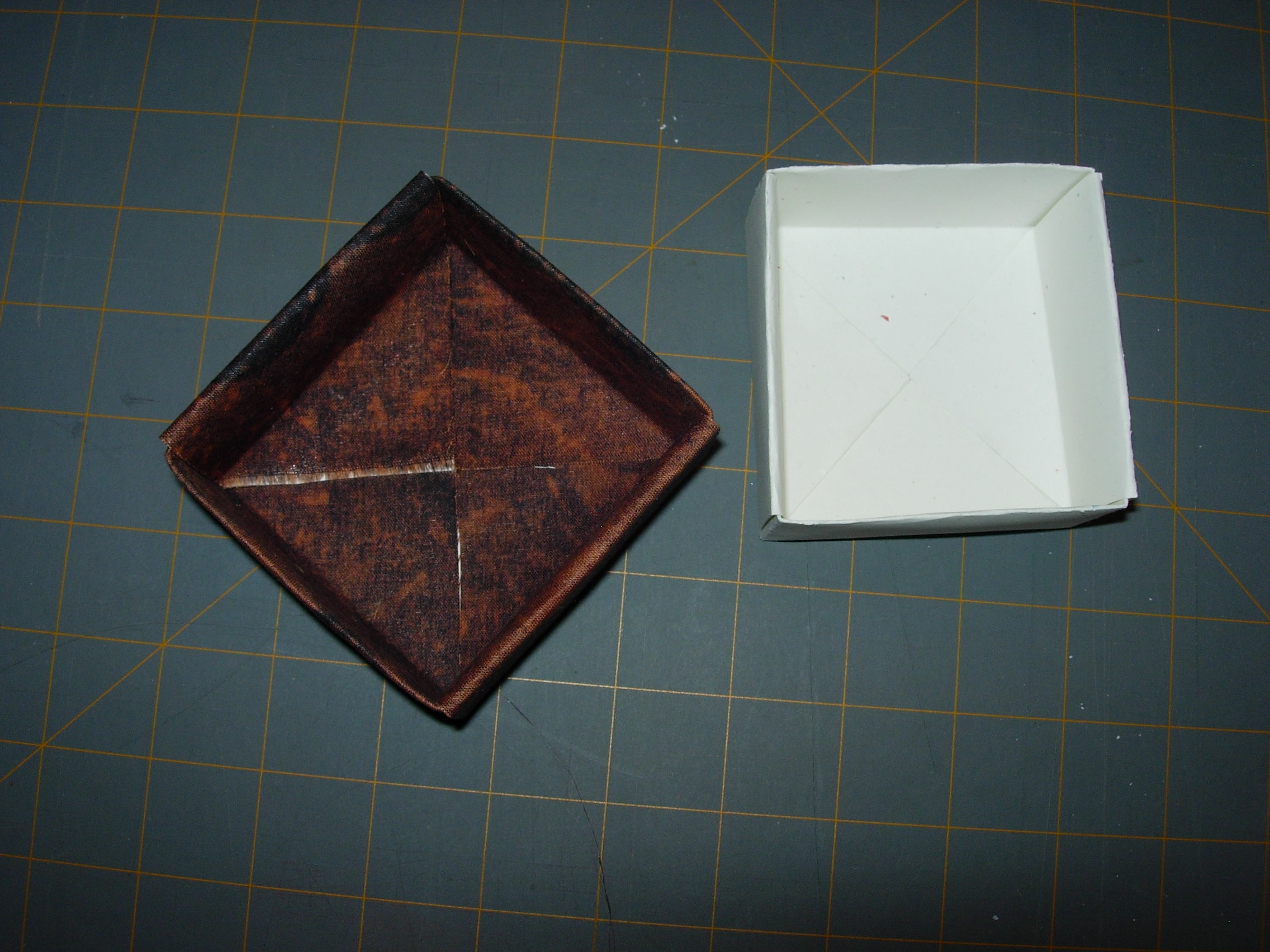
The picture below shows the inside view of the top and bottom of the box.

DSCN2741

To decorate your box, you can stitch or use hot glue to attach a charm, button, ribbon, tassel or anything you wish to the lid. Or you can leave it simply as it is.

I made mine small at 8 1/2 inches only because of the convenience to the size of card stock, but this box can be made larger . It can be given as a personalized gift or used to hold mementos.

Have fun!

The White Rabbit said, “Who in the world am I? Ah, that’s the great puzzle.”

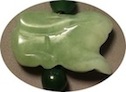
This blog is intended as a platform to share some of my artwork and ideas. Creativity happens in all areas of my life. It has become more difficult to sort out the fine art stuff so I have stopped trying and accepted that art and creativity happens even while baking, or drawing, or sculpting, or knitting, or gardening…you get the idea. I jump around from one thing to another. And am essentially a believer in the statement posited by Joseph Bueys who once stated in answer to a question from a student that everything under the sun is art. http://www.tate.org.uk/whats-on/tate-liverpool/exhibition/joseph-beuys-revolution-us Starting in 2013 I spent a year living and teaching art in China – I’ll post more about that later – but while I was there I learned that the word for rabbit is tuzi. My students taught me how to pronounce it and they showed me that the man in the moon wasn’t a man at all but a rabbit in the moon – who knew? The same time as I was teaching there, the Chinese launched a rover to explore the moon called the Yutu, the Jade Rabbit. A friend living back home in America who is very interested in astronomy first made me aware of this. So when I asked what she would like me to bring back when I returned she said just come back safe and then reconsidered and said, “well I wouldn’t mind a jade rabbit.” It was then the lunar rover landing, my student’s tutoring and my friend’s interest and request all beautifully entwined initiating a quest for all kinds of rabbits in all kinds of forms. So the title of my blog is essentially ‘ArtRabbit’ for an artist that jumps from one idea to another…except that ArtTuzi has a better ring to it and better represents me to you.

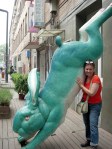
arttuzi Photo of me with a Tuzi. This public sculpture, artist unknown, is leaping from the building onto the sidewalk. One is forced to walk under or around it. Beijing, China 2014.